
Two Problems That Get Mistaken for Each Other
"Concrete cancer" is the phrase people reach for whenever a slab looks past saving - stained, cracked, flaking and generally tired. In the trade, though, the term means one specific thing, and it isn't cosmetic: corroding steel reinforcement breaking the slab apart from within. Most of the tired-looking concrete we assess across South-East Queensland doesn't have it.
The distinction matters because it decides everything about the fix. Surface damage can be repaired and coated over for tens of dollars per square metre. Genuine structural failure can't be coated over at any price - a new surface on a failing slab just hides the problem while it gets worse. This guide covers how to tell the two apart from what you can see, what each fix costs at our published rates, and where the honest limits of a coating sit.
Surface Damage Lives in the Top Few Millimetres
Staining, faded colour, surface wear, pitting, chips and hairline cracks that stopped moving years ago are all problems with the slab's face, not its bones. The concrete underneath is still doing the structural work it was poured to do - it just looks rough doing it.
Concrete Cancer Attacks the Slab From the Inside
When moisture gets deep enough into reinforced concrete, the steel inside starts to corrode. Rust takes up more space than the steel it grew from, so the corroding reinforcement cracks and pushes off the concrete around it - the slab is being broken apart from within. That process is structural by definition, and it doesn't stop on its own.
Surface Damage: Ugly, Common and Fixable
South-East Queensland is good at making concrete look worse than it is. Summer storms drive water, leaf litter and tannin stains across driveways and patios, and the intense UV fades any coloured finish that isn't protected. Add decades of oil staining and surface wear that exposes the aggregate, and a slab that's structurally fine can look like a write-off from the letterbox.
Age compounds it. Whole belts of Brisbane - Stafford, Mount Gravatt, Kenmore and the suburbs around them - were built out in the 70s, 80s and 90s, so their original driveways and paths are now 30 to 50 years old, and it shows. Most of what makes those slabs look terrible is exactly this kind of surface-level wear and staining.
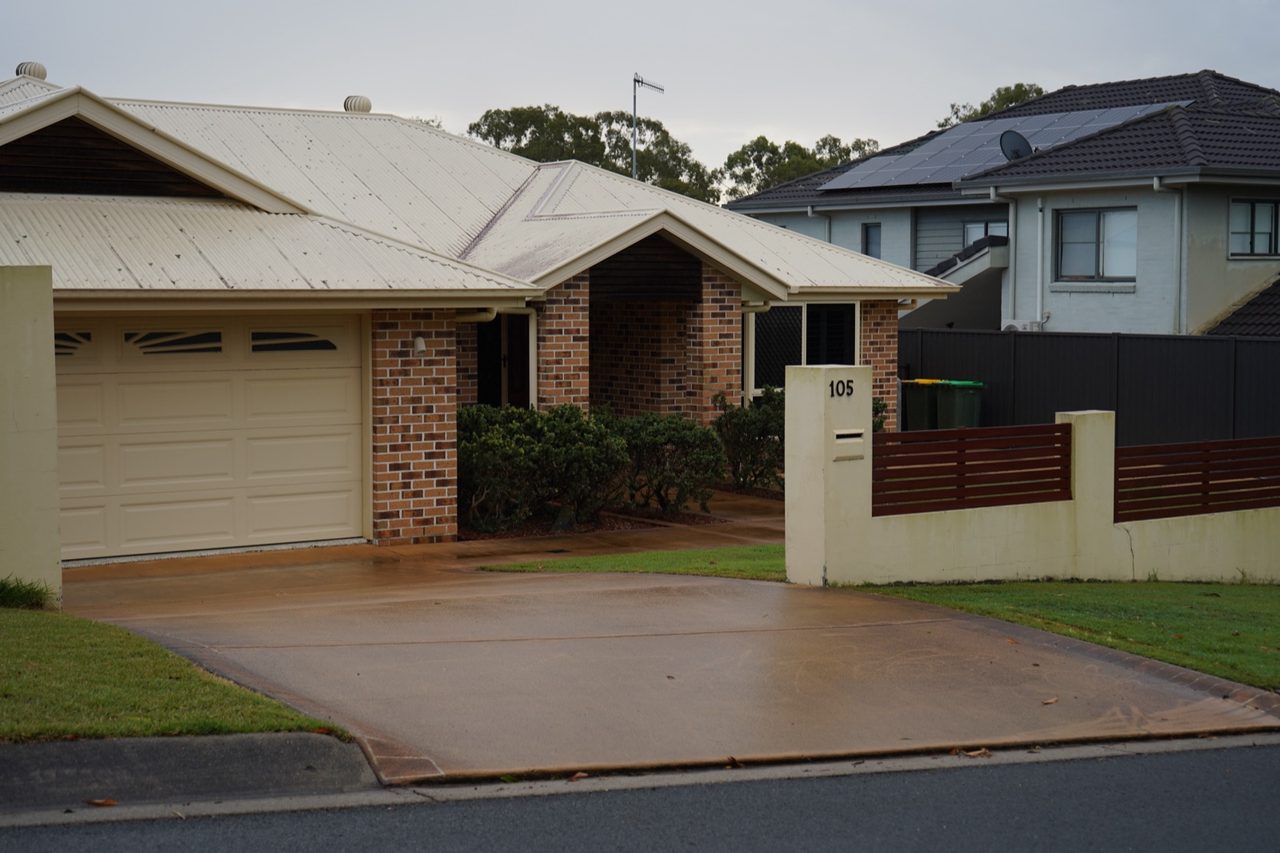
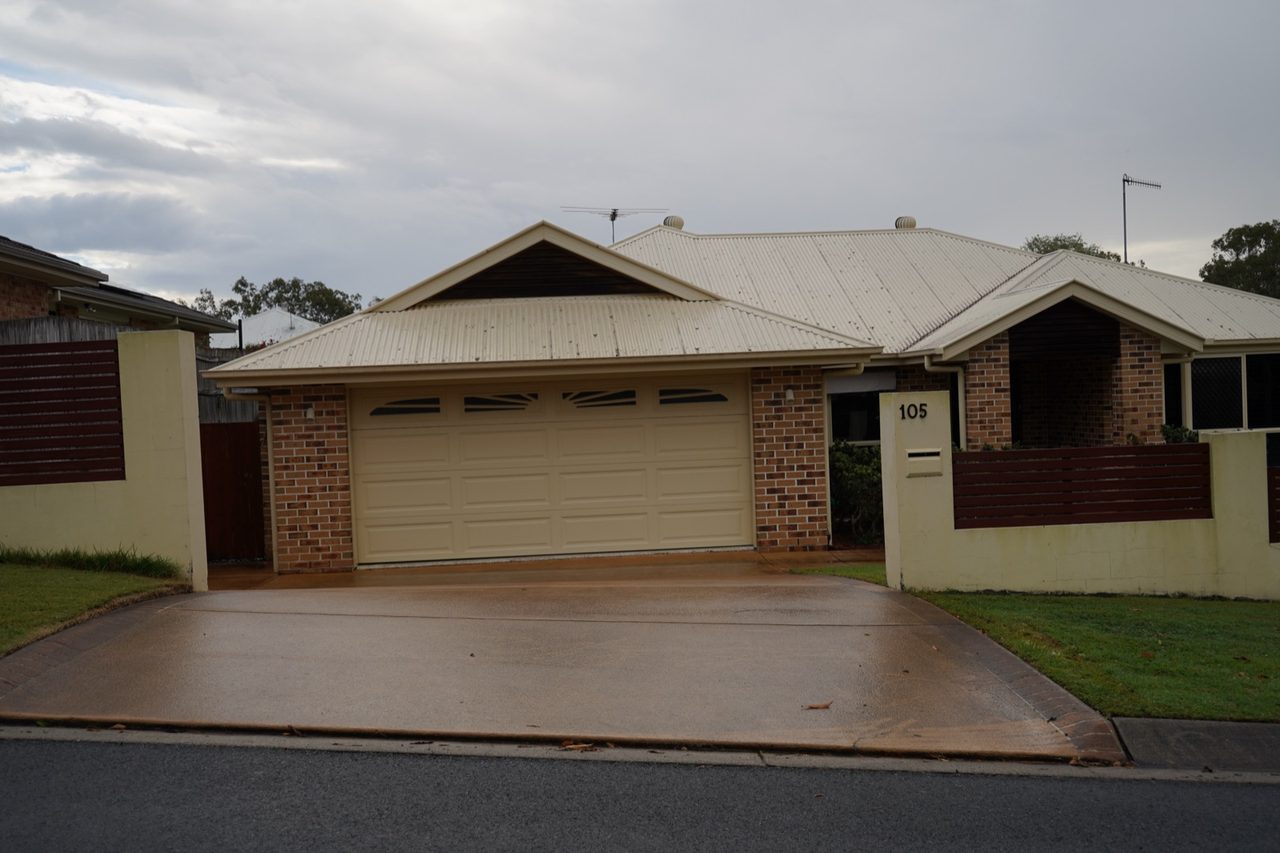
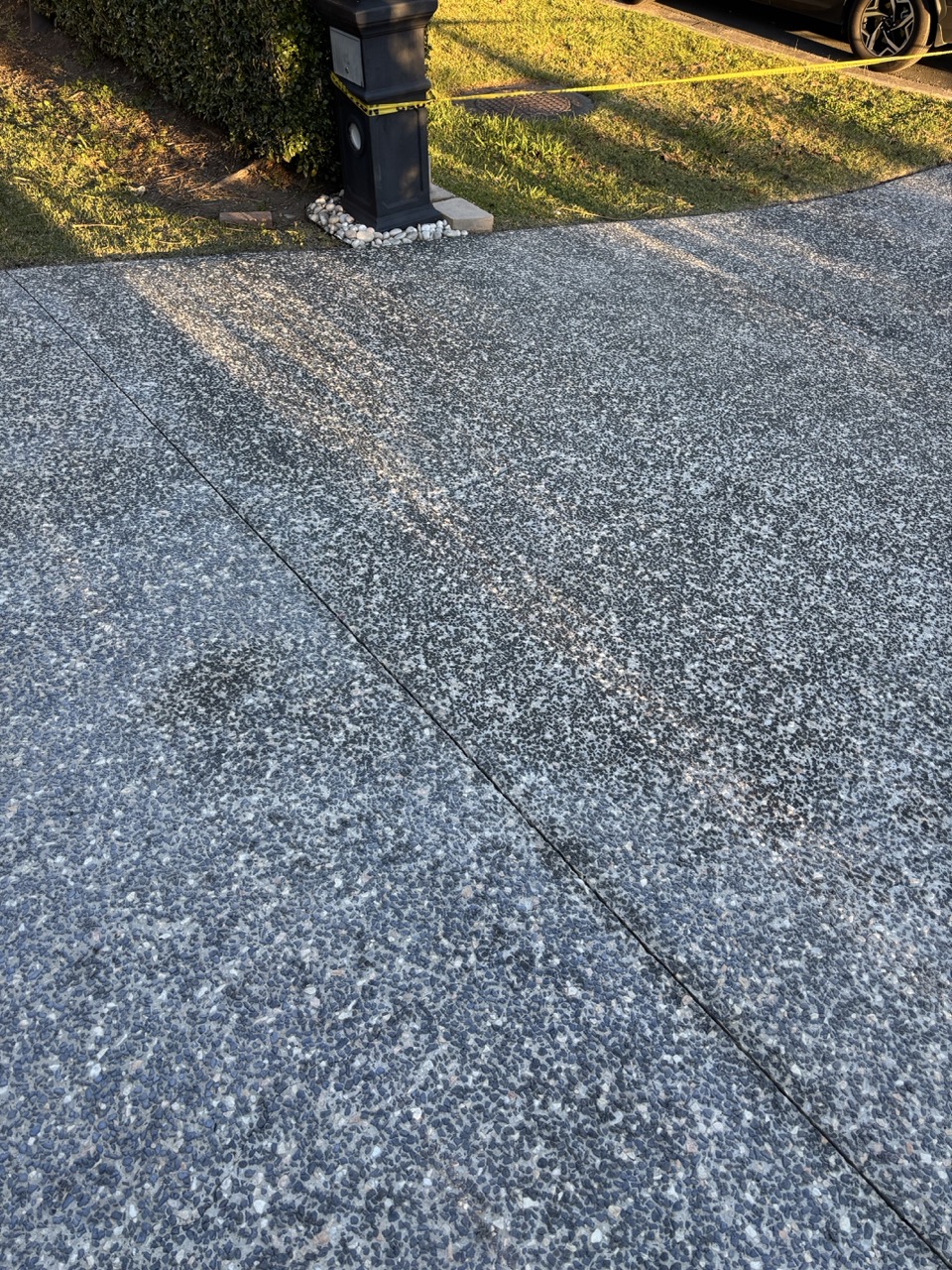
The defining feature of all of it is that it's repairable during preparation. Before a spraycrete overlay or driveway resurfacing job goes down, the surface is ground and cleaned, and cracks, chips and spalled patches are repaired, so none of it telegraphs through the new finish. The driveway below is typical of the category - patchy staining that makes the whole frontage look tired, on a surface a coating deals with as a matter of routine.
The Signs That Point to Concrete Cancer
Because the damage starts at the steel, the visible signs are different in kind from surface wear - they're evidence of something happening inside the slab rather than on it. The surface symptoms arrive late, after the corrosion has already been running for a while.
These are the signs worth taking seriously:
- Rust-coloured staining bleeding out of cracks or joints - the corroding steel announcing itself
- Concrete breaking away in chunks to expose rusted reinforcement underneath
- Sections of slab that have come loose, dropped, or sit stepped against their neighbours
- Cracking that keeps opening and moving with the seasons instead of settling
Two close relatives belong on the same list even though they aren't corrosion: significant subsidence, and a base that has failed underneath the slab. Different cause, same verdict - the problem is under or inside the concrete, not on it.
A coating can't fix any of these, because an overlay bonds to the slab underneath and is only ever as good as that slab. Coating over genuine structural failure just gives the failure a new colour. When we find these problems at the quote stage we say so and recommend replacement, cost aside - there's no version of resurfacing that makes a structurally failed slab sound again.
The Grey Area: Cracks
Cracks sit in both camps, which is why they cause the most second-guessing. Much of Brisbane sits on reactive clay soil that swells when wet and shrinks when dry, and every wet season the ground moves. Older slabs poured without decent control joints crack along whatever line the soil chooses.
The test isn't the crack - it's the movement. Hairline cracks that have stopped moving are cosmetic: they're repaired during surface preparation and disappear under the new finish. Cracks that are still opening, closing or stepping with the seasons mean the movement has to be sorted first. We assess this at the quote stage, and we won't resurface a slab that's still moving - an overlay applied over live movement will simply crack along the same line.
What Each Fix Costs
The reason the diagnosis matters is the price ladder attached to it. If the slab is sound and the surface has just lost its protection, clear or coloured sealing runs $25-30 per square metre. If it's sound but stained, worn, cracked or dated, resurfacing runs $50-100 per square metre including sealing - a standard 60m² driveway typically comes in around $4,500. If the structure has genuinely failed, replacement starts from around $150 per square metre once demolition and disposal of the old slab are factored in.
That's the honest hierarchy: seal it if it's sound and just unprotected, resurface it if it's sound but ugly, replace it if it's structurally gone. Each step up is a big jump in cost, and getting the diagnosis wrong wastes money in both directions - paying for replacement when the slab only had surface damage costs thousands it didn't need to, and paying for a coating over concrete cancer wastes the whole coating.
What the Right Diagnosis Looks Like Afterwards
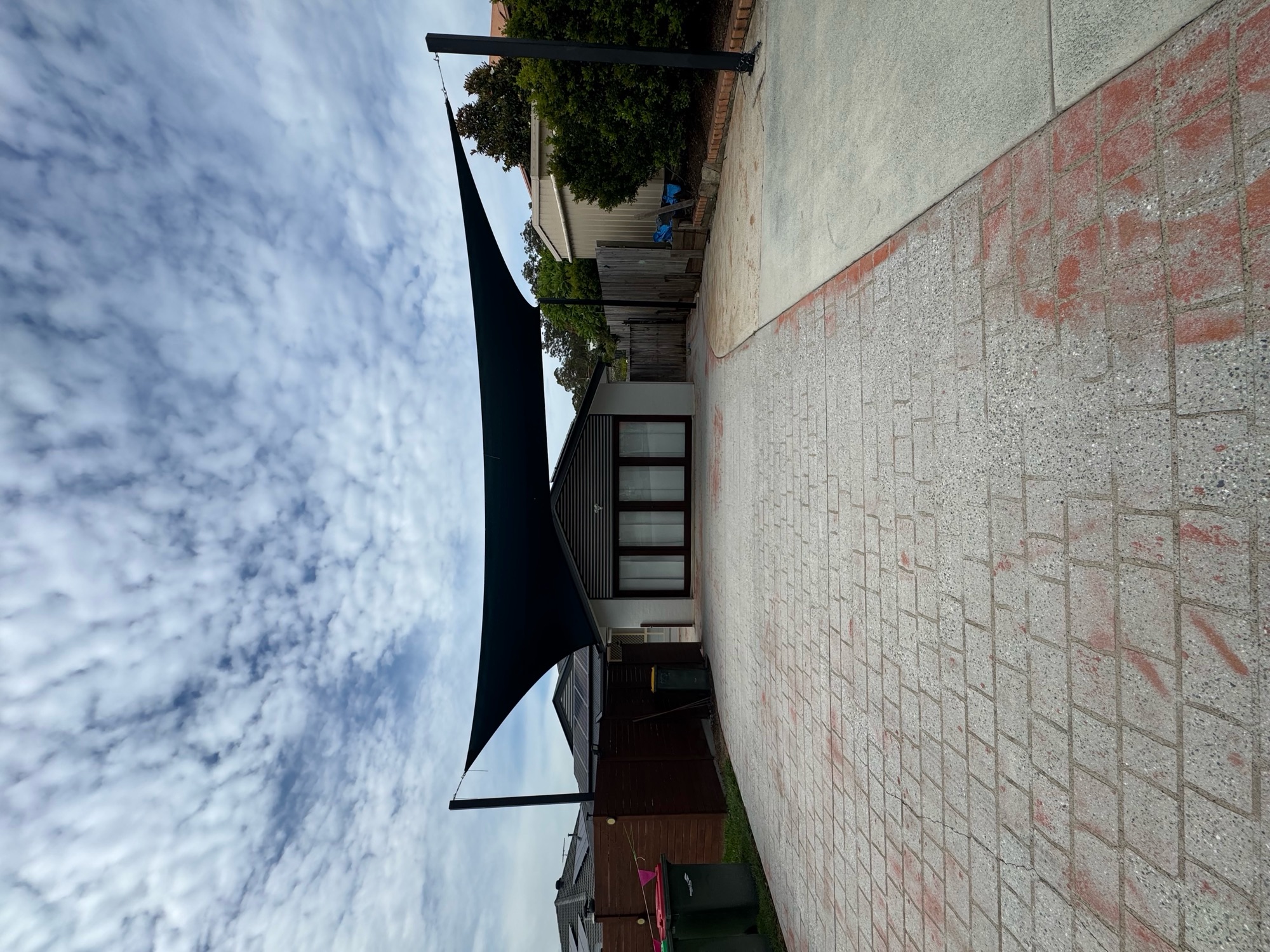
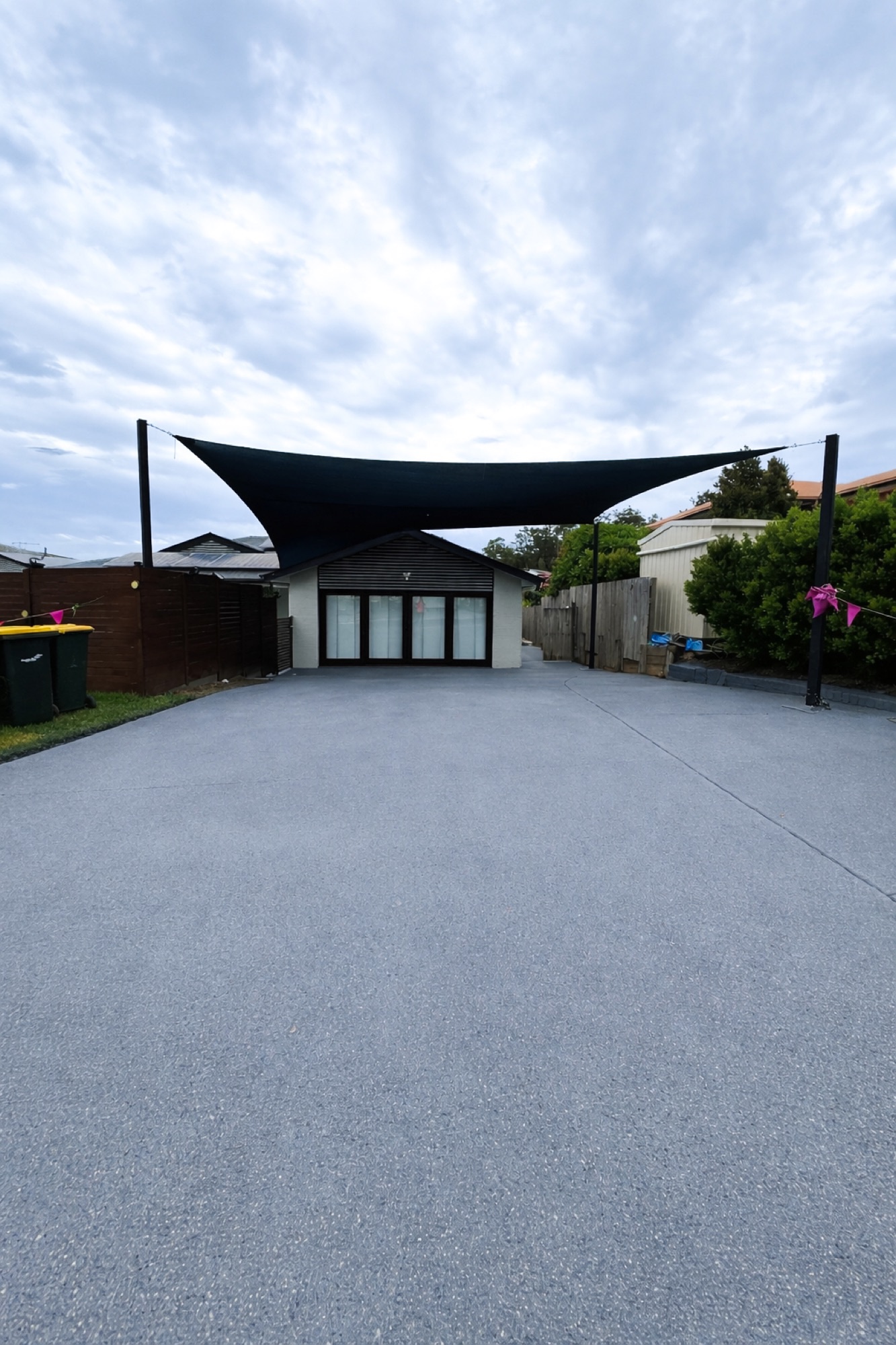
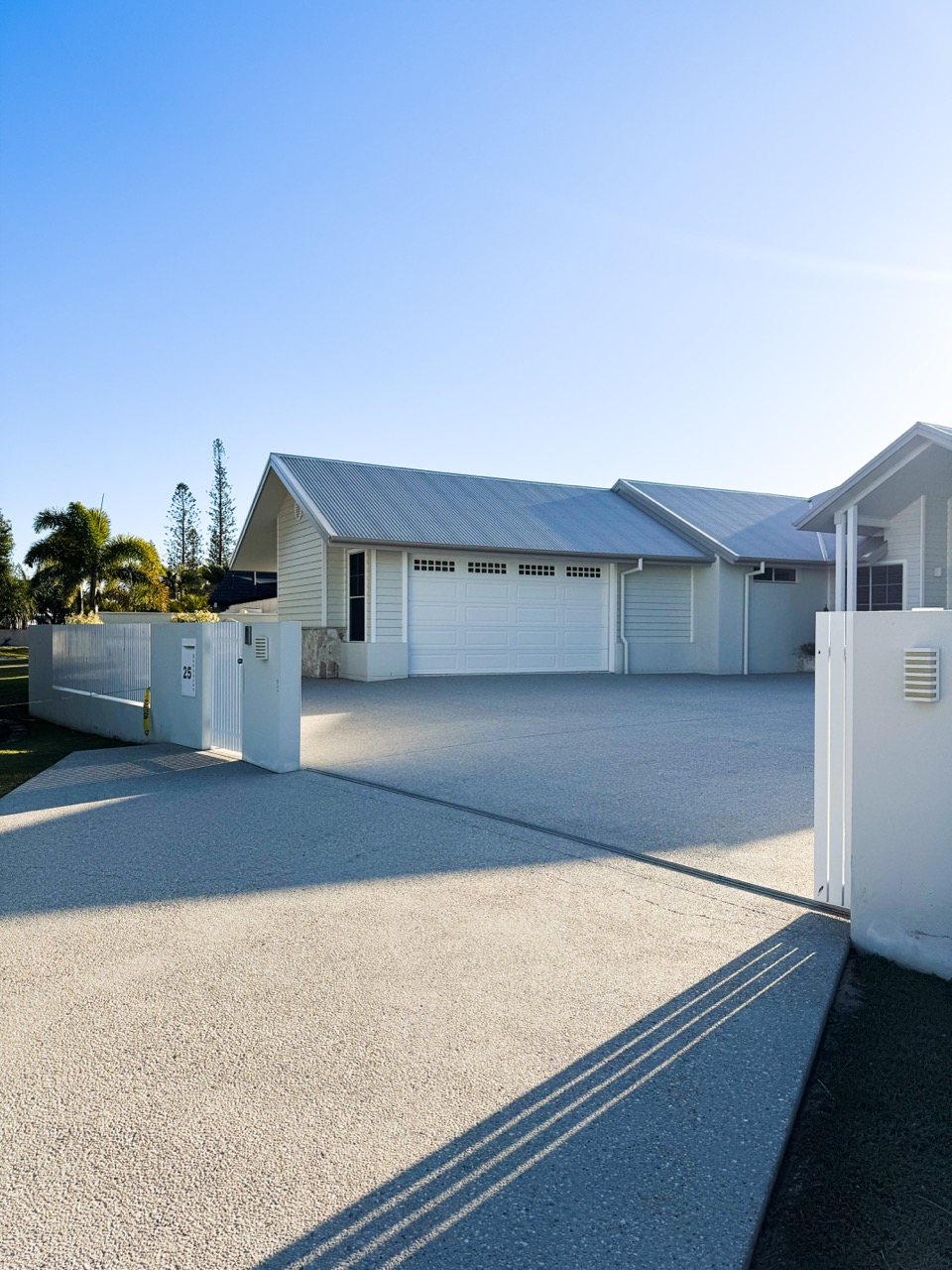
The driveway below shows the point of getting the call right. Before, it was cracked and stained enough to read as a candidate for the jackhammer - but the damage was in the surface, not the structure, which made it a resurfacing job rather than a replacement. It was recoated in Atlantic with a black and white fleck. Drag the handle to compare.
The practical difference is worth spelling out: a resurfaced driveway can usually be walked on within 24 hours, with vehicles kept off for 7 days while the coating and sealer fully cure. Looked after with a fresh coat of sealer every three to five years, the surface has a working life of 20-plus years, and the work is backed by a written workmanship warranty of two to five years.
If You're Not Sure, Don't Guess From the Kerb
Some of the signs above are unambiguous - exposed rusting steel is exposed rusting steel. But plenty of slabs sit somewhere in between, and the surface alone doesn't always tell you what the structure underneath is doing. That's why slab condition is assessed at the quote stage on every Brisbane resurfacing job, and the recommendation follows the concrete's actual condition - if a driveway needs replacement, we say so rather than coat over it. For the full resurface-or-replace decision on a driveway, see our guide to driveway resurfacing vs replacement in Brisbane.
CoatPro is a QBCC-licensed contractor and a member of Master Builders Queensland, and we carry over $20 million in public liability insurance. Across South-East Queensland we've coated more than 120,000 square metres of concrete, so we've seen most versions of both problems - and of the grey area in between.
If your concrete looks like the photos above and you want to know which problem you've actually got, get a free estimate or call Christian on 07 4428 2811. Photos of the worst sections are a good start, and you'll get a straight answer on whether it's a coating job or not.
- A straight answer on whether your slab needs sealing, resurfacing or replacement, based on its actual condition
- Crack, chip and spall repair handled during surface preparation on resurfacing work
- A written workmanship warranty of two to five years on resurfacing
- An assessment at the quote stage - we won't resurface a slab that's still moving
- Extensive Queensland experience across all regions and applications
- Customised coating recommendations for Queensland's challenging climate
- Proven track record with thousands of satisfied customers
- Comprehensive warranties and ongoing support
- Licensed, insured, and committed to excellence
FAQs
Common questions about concrete cancer, surface damage and what a coating can fix.
No. An overlay bonds to the slab underneath and is only ever as good as that slab, so coating over corroding reinforcement just hides a structural problem while it keeps getting worse. Where a slab has genuine concrete cancer, replacement is the honest recommendation, and that's what we'll tell you at the quote stage.
The test is movement. Hairline cracks that have stopped moving are cosmetic and are repaired during surface preparation before a coating goes down. Cracks that keep opening, closing or stepping with the seasons - common on Brisbane's reactive clay soils - point to ongoing movement that has to be sorted before any coating makes sense.
Staining, UV fading, surface wear, pitting, chips and settled cracks - the damage that lives in the surface rather than the structure. These are repaired during preparation and disappear under the new finish. Resurfacing costs $50-100 per square metre including sealing, and a resurfaced surface has a working life of 20-plus years when resealed every three to five years.
Rust-coloured staining bleeding from cracks, concrete breaking away to expose rusted reinforcement, sections of slab that have come loose or sit stepped against their neighbours, and cracking that keeps moving with the seasons rather than settling. Significant subsidence or a failed base under the slab belongs in the same category - problems a surface coating can't fix.
Get Your Free Quote Today
Transform your concrete surfaces with our expert sealing and finishing services. Contact us now to discuss your project and receive a personalised quote. We service all areas throughout South-East Queensland.
- Give Us A Call for immediate consultation
- Email us with your property details and photos
- Use our estimate calculator
- Book online for convenient assessment scheduling
