
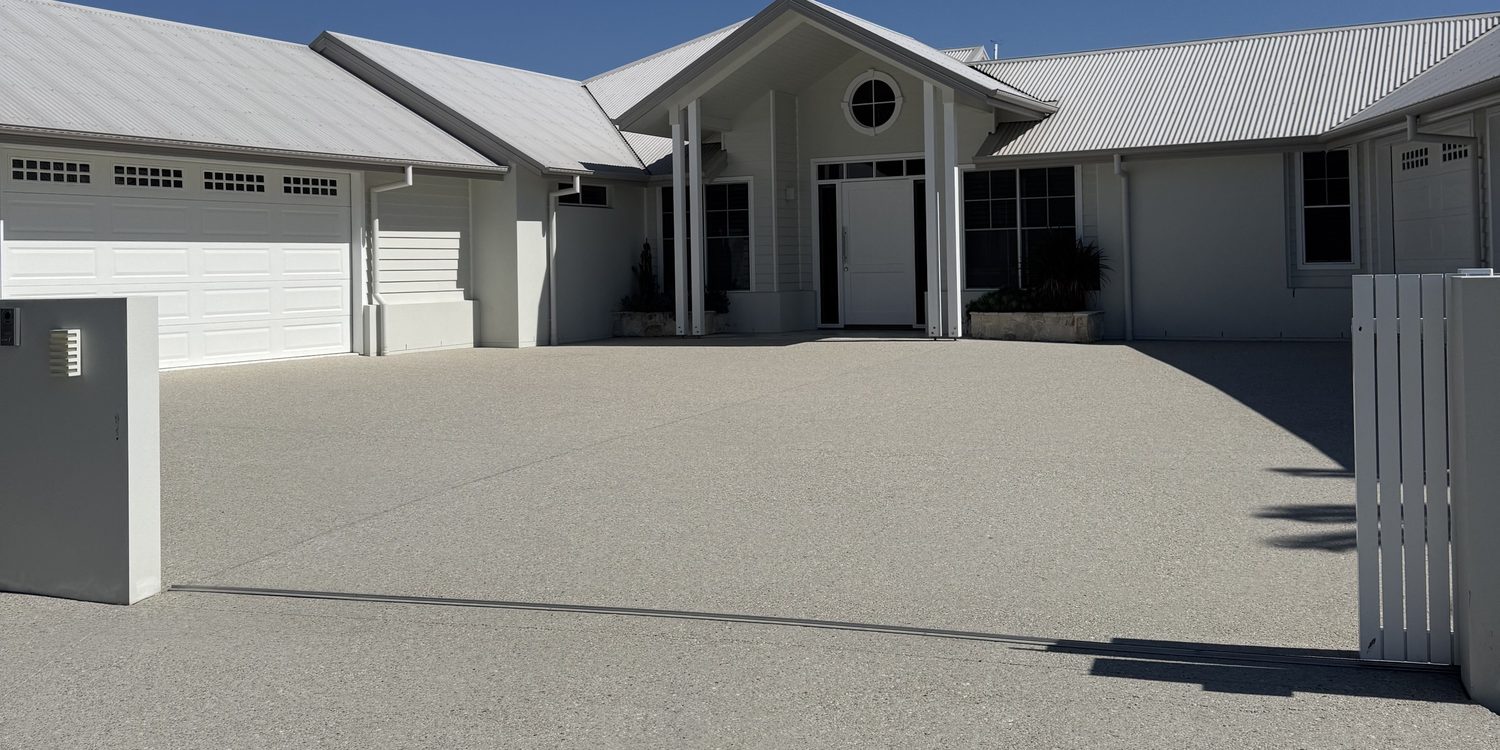
The Short Version: Four Steps and One Day on Site
A professional concrete sealing job runs through four steps: a free on-site assessment of about 20 minutes that ends in a fixed price, a high-pressure clean with mould treatment, the agreed sealer applied in even coats — two coats on most residential jobs — and a controlled cure before the surface takes traffic again. For an average Brisbane driveway or patio the on-site work usually fits inside a single day, and most residential jobs start from $30 per square metre plus GST including the preparation and both coats.
None of those steps is exotic, which is exactly why the result comes down to whether they're actually done, in order, without shortcuts. A sealer can only bond to what it touches: give it a clean, dry, compatible surface and a professionally applied penetrative seal typically protects a slab for 5 to 10 years. Put the same product over a dirty or damp slab and it fails early, no matter what the tin cost.
This guide walks through each stage the way it happens on a real CoatPro job — what we check before quoting, what you'll see happening on the day, where the time actually goes, and the handful of things you can do yourself to make the day run smoothly.
Step One Is a 20-Minute Assessment, Not a Price Over the Phone
Every job starts with someone standing on your concrete. Once you've enquired, we call within one business day to book a free on-site assessment. It usually takes about 20 minutes, and it ends with a fixed price rather than an estimate that moves later. We check the slab itself, anything already sitting on it, and the finish you're after — because all three change what the right system is.
On bare concrete that system is usually a clear penetrating sealer, which soaks into the pores and keeps the surface looking completely natural. Where a sound clear topical sealer is already in place, the right call is a compatible clear topical over the top. And if you want to refresh or change the colour instead, a pigmented coloured topical sealer does that — there are more than 15 colours, with sample boards at the quote so you're choosing off real texture rather than a brochure page.
There's a check you can run yourself before we arrive. Pour a cup of water on a dry patch of the concrete: if it soaks in and darkens the slab, the surface is absorbing water despite any previous treatment; if it beads or sits on top, a sealer may still be active. Either way it's a clue, not a diagnosis — working out what's actually on the slab, and what will bond to it, is exactly what the on-site assessment in Brisbane is for.
Preparation: The Clean Decides How Long the Seal Lasts
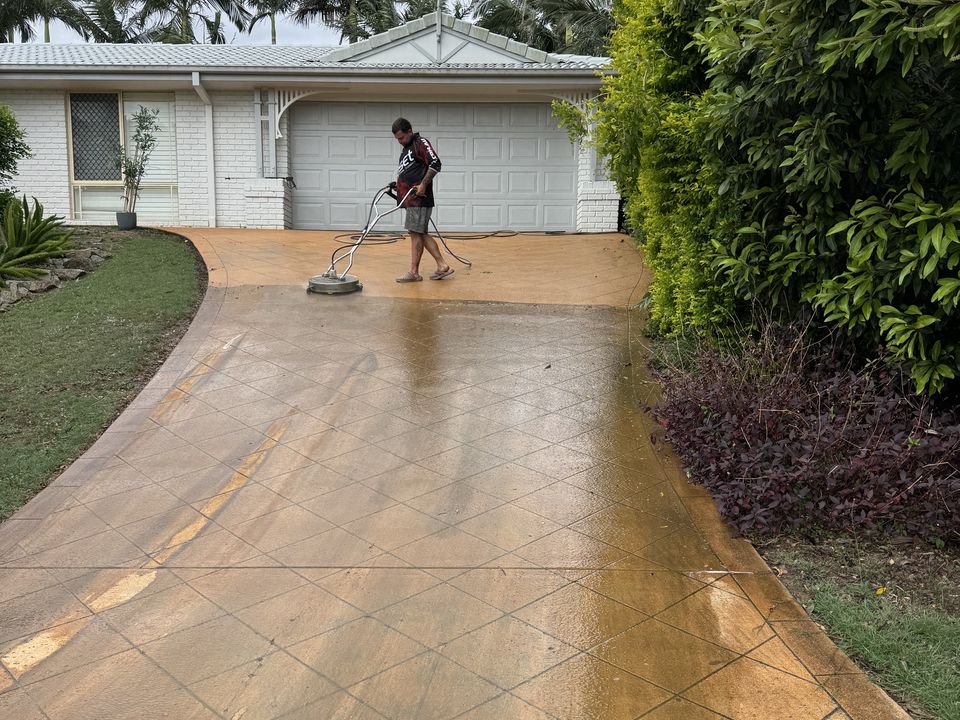
Preparation is where a professional job earns its keep, and most of it is cleaning. Every sealing job starts with a high-pressure clean, and where there's mould, algae or built-up grime, a chlorine or acid treatment goes down as well — so the sealer meets concrete rather than a film of organic growth.
The reason is blunt: sealer over a dirty or damp slab fails early. A penetrative sealer works by soaking into the concrete's pores and forming a chemical barrier inside them, and anything blocking those pores stops the product doing its job. That's also why the preparation is included in our standard $30 per square metre rate rather than sold as an extra — skipping or thinning the prep is the classic corner that cheap quotes cut, which we've covered in detail in why sealing quotes vary so much in Brisbane.
Already Sealed or Coated? That Gets Sorted Before Anything New Goes On
If your concrete has been sealed or coated before, the new product has to suit what's already there, so that gets assessed before anything is recommended. Some penetrating sealers can be reapplied directly over their predecessor; topical sealers may need stripping first. That compatibility call is made at the assessment, not guessed at on the day.
A loose, peeling or flaking coating needs preparation or removal before anything new goes on. That work is priced separately and agreed before we start — never a surprise line on the invoice. Cloudy or milky patches get assessed for their cause and for compatibility before recoating; we've written up what causes cloudy sealer if your driveway already has that problem.
The last part of preparation is simply patience: after the clean, the slab dries fully before any sealer goes on. Sealer over a damp slab fails early just as surely as sealer over a dirty one, so the drying window is part of the schedule, not dead time. Done properly, the payoff is measured in years — that 5-to-10-year working life assumes the sealer went onto clean, dry concrete.
Application: Even Coats With Professional Equipment
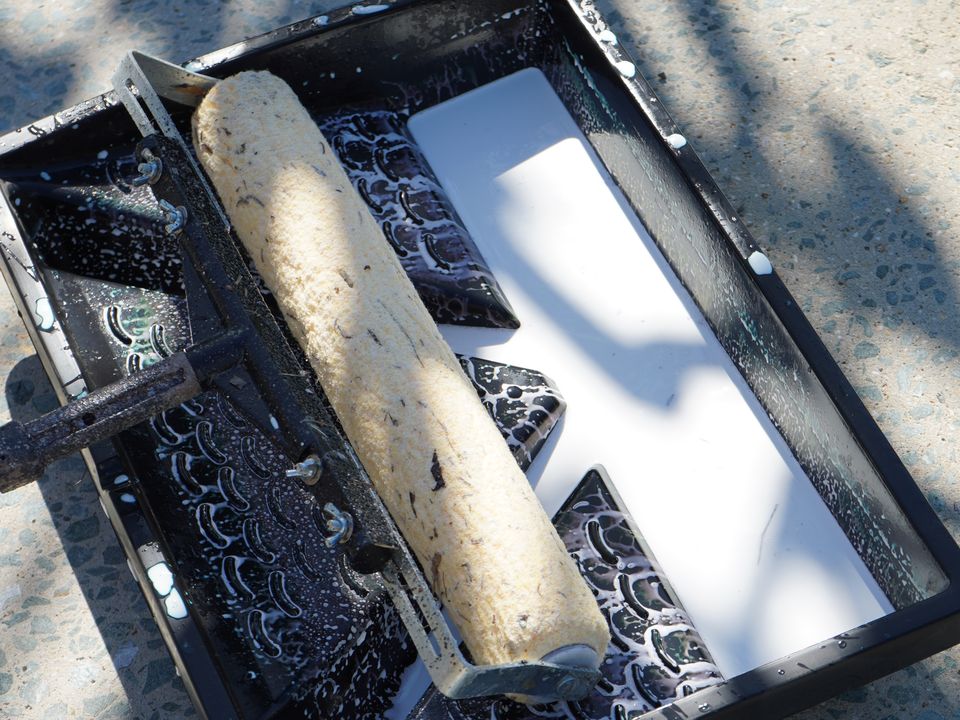
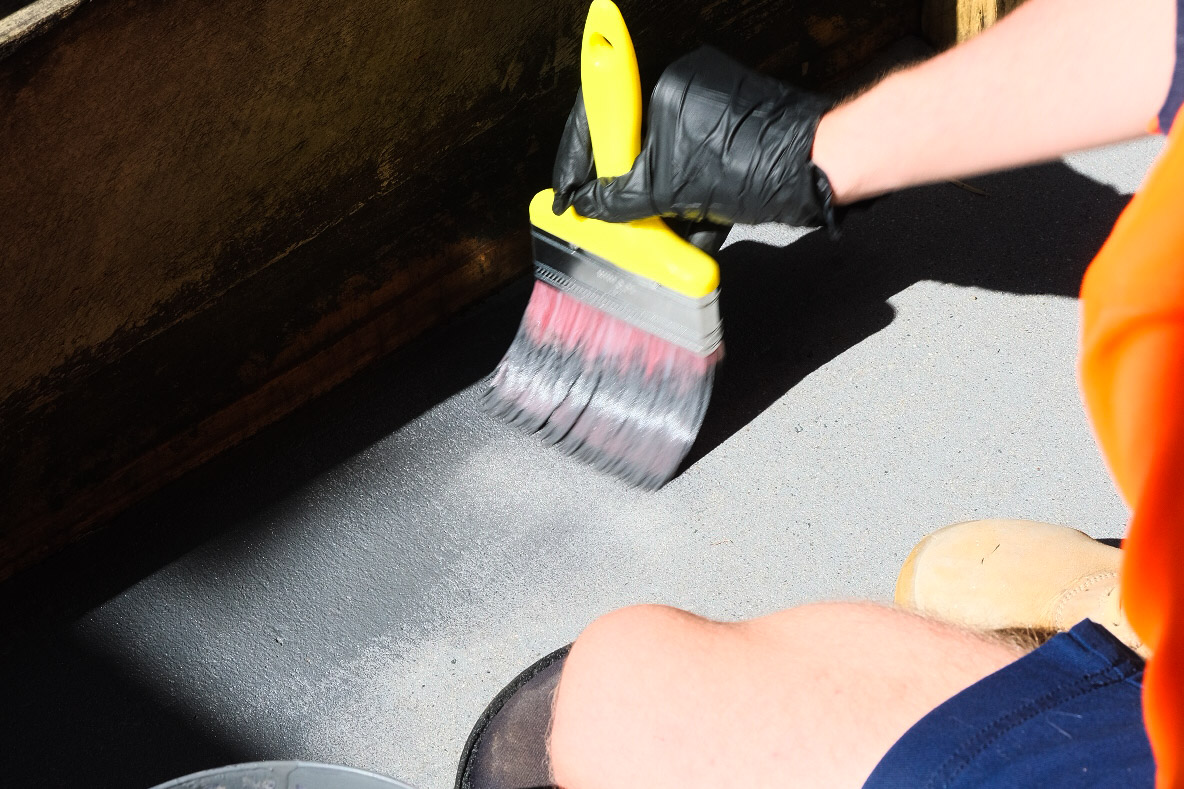
With the slab clean and dry, the system agreed at the assessment goes on in even coats. For clear penetrative sealing that means professional low-pressure spray equipment, which lays down an even, consistent coat across every square metre. That even coverage is the point of the professional gear — it matters more than how fast the job gets done.
Most residential jobs get two coats, to ensure full penetration and maximum protection. Watching it happen is underwhelming in the best way — a penetrative sealer disappears into the surface rather than building a visible film, so the finish is your concrete, protected, rather than a layer of sheen sitting on top of it.
The penetrative sealers we use are low-VOC and water-based. There's a mild smell during application that dissipates within a few hours, and once cured the sealer is odourless — which is why the same products are safe for garages and indoor slabs, not just driveways and paths.
The Numbers on a Standard Brisbane Sealing Job
Most residential sealing jobs, clear or coloured, start from $30 per square metre plus GST — and that figure includes the preparation and two coats of sealer, not just the application. Larger areas typically come in at the lower end of the range. Four things move the price: the area and its layout, the condition of the slab, whatever is already on it, and the system chosen for it.
Time-wise, an average driveway or patio is cleaned, treated and sealed in a single day on site. For clear penetrative sealing the surface takes foot traffic again after around 4 hours and vehicles after 24. Your exact price is fixed at the free assessment — about 20 minutes on site — and if you want to see how the numbers assemble before anyone visits, our Brisbane sealing cost guide breaks the rate down line by line.
The work is carried out under QBCC licence 15620475, which you can verify on the QBCC licensee register, with $20 million in public liability insurance, and CoatPro is a Master Builders Queensland member. Across Brisbane and South East Queensland we've now upgraded more than 120,000 square metres of concrete.
Curing and Handover: The Hours That Protect the Years
Curing is the step most people want to rush, and the one a professional crew won't. How long the surface needs depends on the product, the surface and the weather, so rather than a generic rule we confirm exactly when you can walk and drive on your concrete before we leave. As a guide, clear penetrative sealing takes foot traffic after about 4 hours and vehicles after 24; across sealer types more broadly, foot traffic can need 4 to 8 hours and vehicle traffic anywhere up to 3 to 7 days, so the windows for your specific system are worth getting in writing.
The job ends with a walkthrough: we walk the finished surface with you, confirm those cure times, and hand over the written warranty. One thing worth knowing for pool surrounds and paths — a penetrative sealer doesn't change the surface texture at all, so your concrete keeps its original grip, with no film to turn slippery when wet.
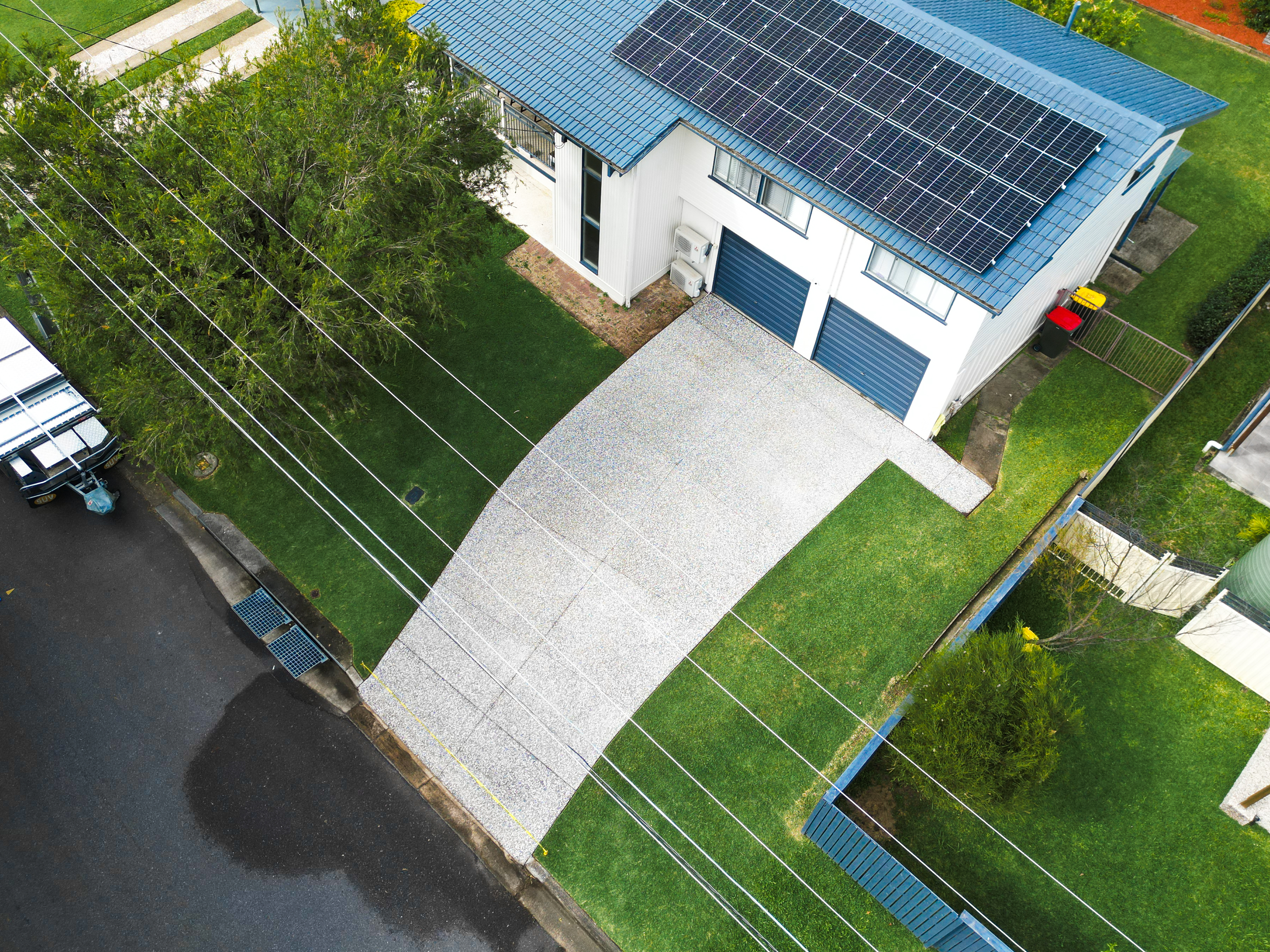
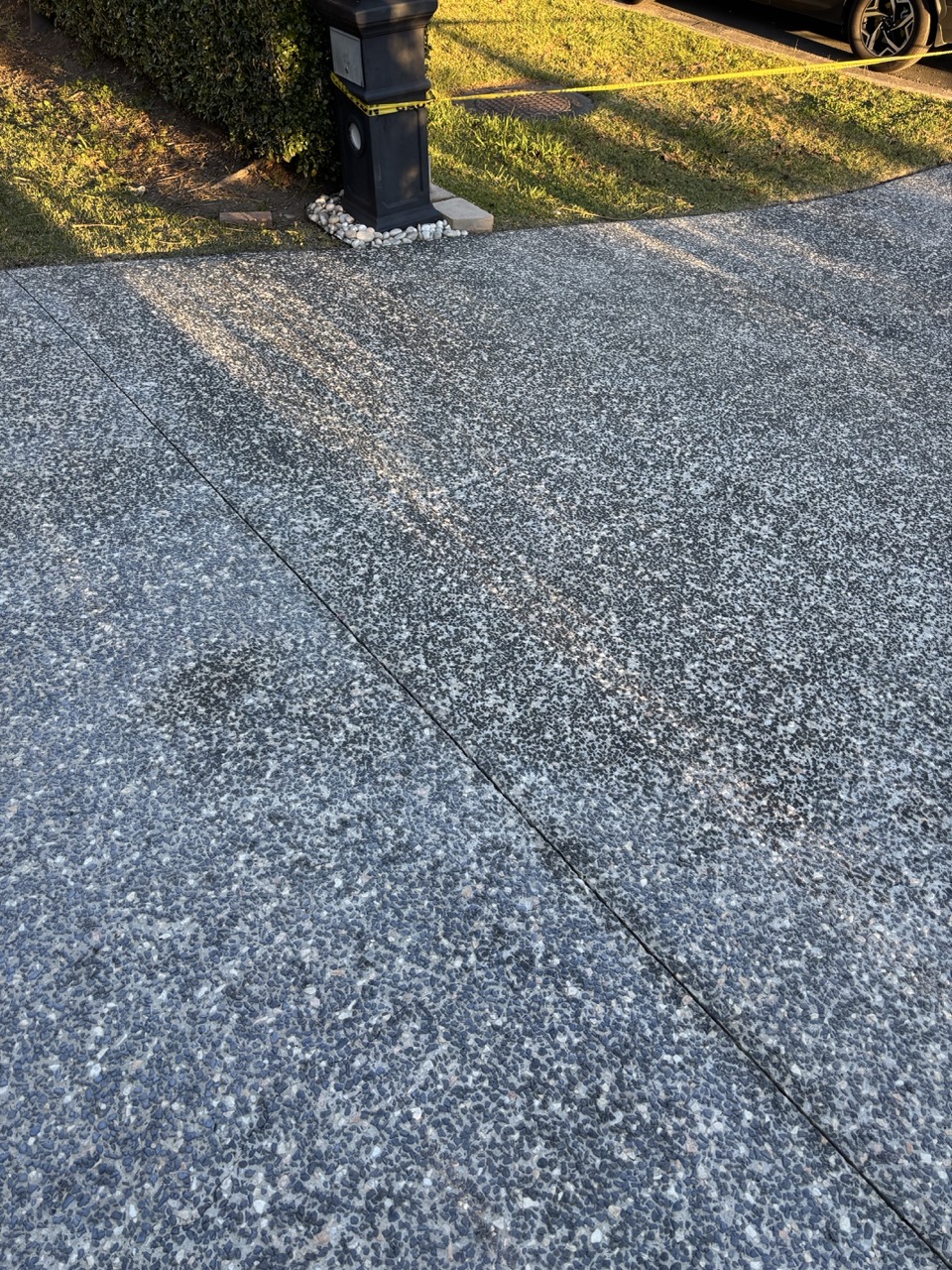
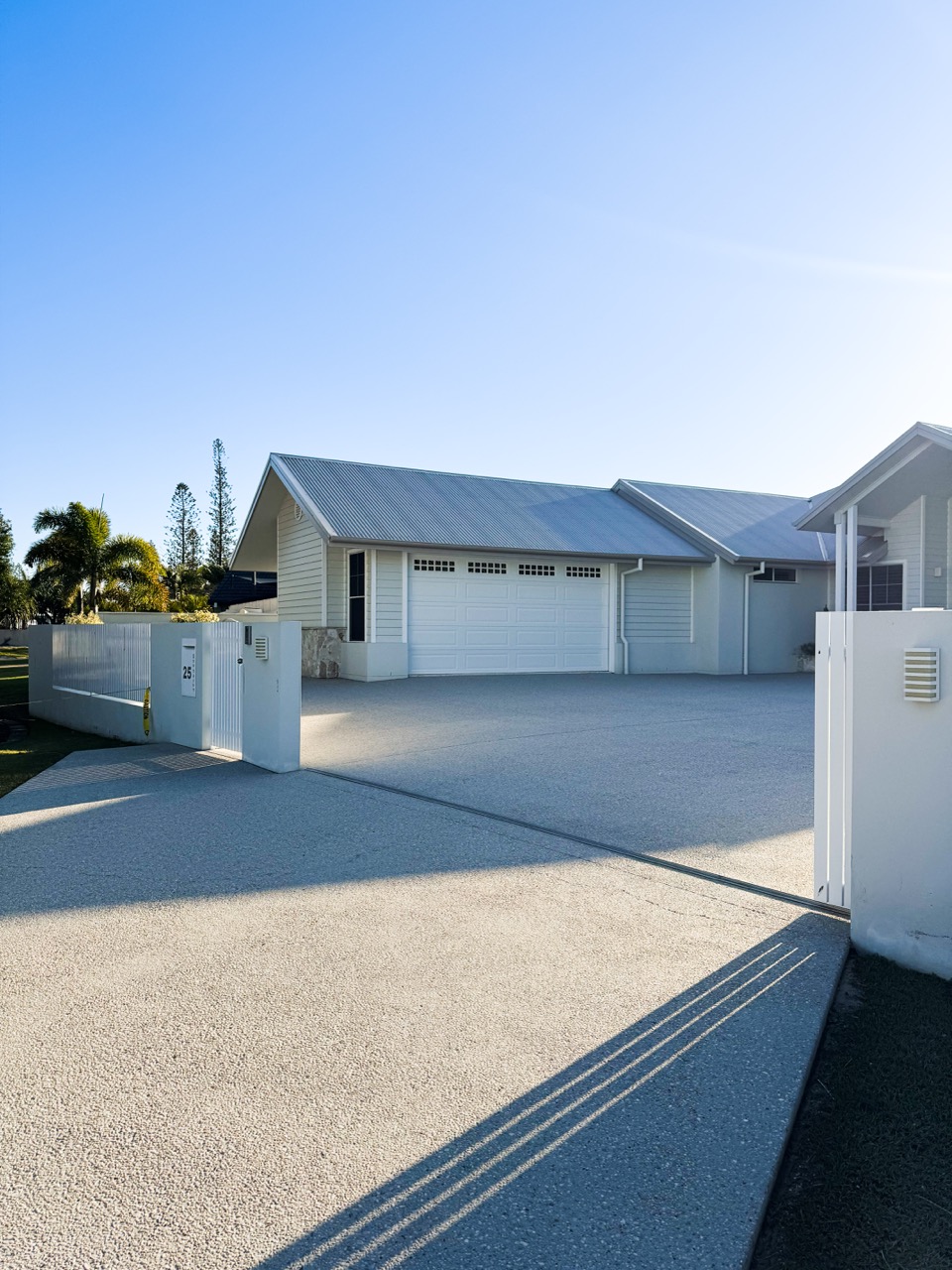
Below is what the finished product of that process looks like on a real job — a Mitchelton driveway, cleaned and clear sealed. Drag the handle to compare: the right-hand side isn't a different driveway, just the same one with every step above done properly.
Getting Your Place Ready, and Looking After It Afterwards
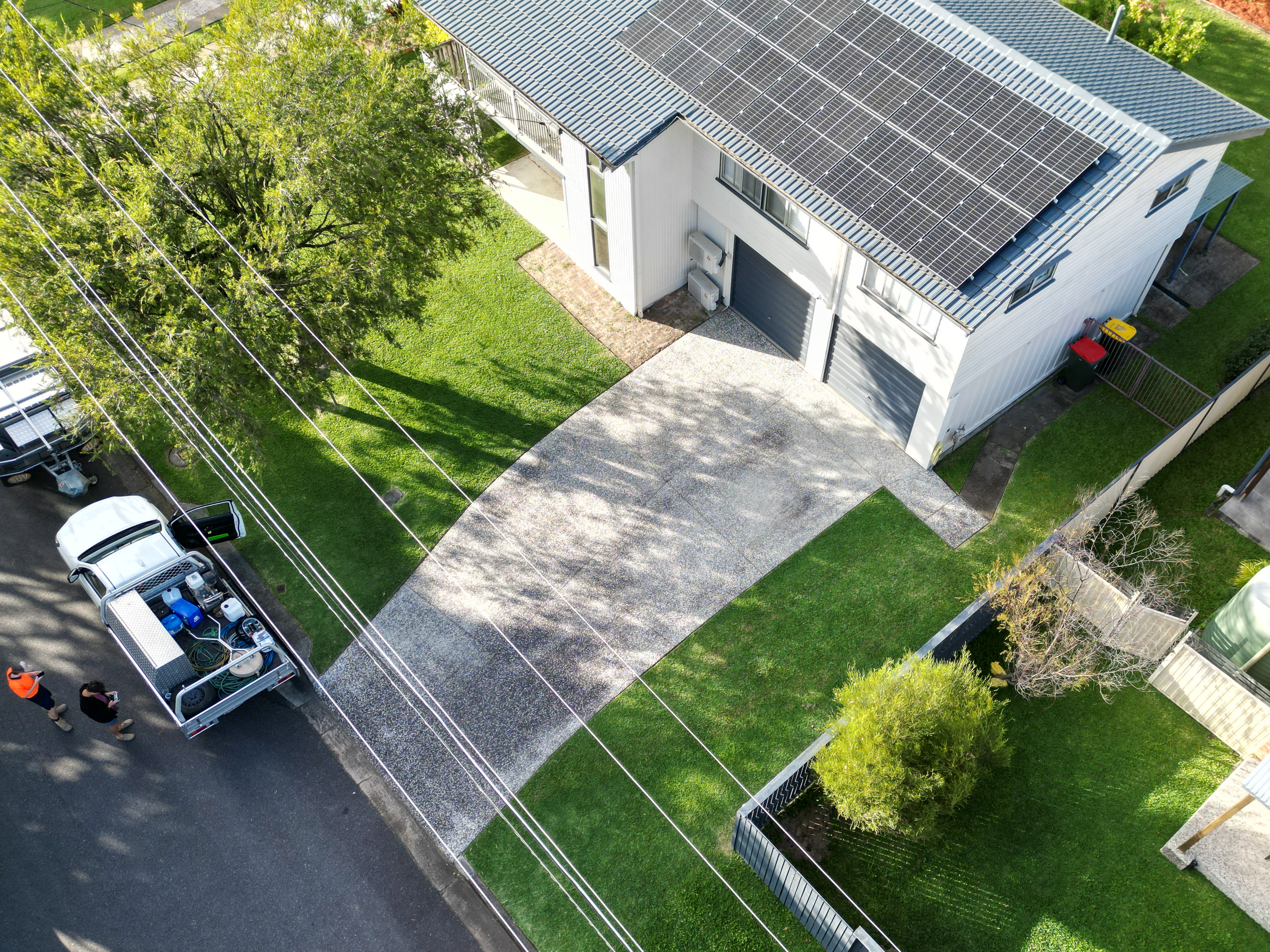
A few small things on your side make the day run smoothly. Have cars off the driveway and out of the garage before the crew arrives, give the lawn edges a quick whippersnip so we can seal right up to the borders, push back any rocks, mulch or garden-bed overflow sitting on the concrete, and move outdoor furniture, pot plants and bins off the areas being sealed. We'll also need access to a power point and a water tap for the cleaning and spraying gear. That's the lot — the heavy preparation work is ours.
Afterwards, the maintenance is deliberately boring: a light pressure wash once or twice a year keeps a sealed surface performing at its best, and we've put together a full guide to looking after freshly sealed concrete. When resealing time eventually comes — driveways sit closer to the 5-year mark, covered patios can push beyond 7 — there's no film to strip or sand back. The surface is cleaned, and a fresh coat goes on.
If your driveway, patio or pool surround is due, start where every good job starts — with the assessment. Get a free estimate online or call Christian on 07 4428 2811, and we'll call within one business day to book a time.
FAQs
Common questions about what happens on a professional concrete sealing job.
Most average-sized driveways and patios are cleaned, treated and sealed within a single day on site. The surface then needs to cure: for clear penetrative sealing, keep foot traffic off for around 4 hours and vehicles off for 24 hours. Other sealer types can need 4-8 hours before foot traffic and up to 3-7 days before vehicles, so we confirm the exact times for your product at handover.
Most residential sealing jobs, clear or coloured, start from $30 per square metre plus GST, including preparation and two coats of sealer. The price moves with the area and its layout, the slab's condition, and whatever is already on the surface. Your fixed price comes after a free on-site assessment, which usually takes about 20 minutes.
Move cars off the driveway and out of the garage, give the lawn edges a quick whippersnip, push back any rocks or mulch sitting on the concrete, and move outdoor furniture, pot plants and bins off the areas being sealed. We also need access to a power point and a water tap for the cleaning and spraying equipment. We handle all the heavy preparation work from there.
A professionally applied clear penetrative sealer typically lasts 5 to 10 years - driveways sit closer to the 5-year mark, while covered patios can push beyond 7. Topical sealers generally need renewal more often, around every 3 to 5 years. Resealing a penetrative system is straightforward: there's no film to strip, so the surface is cleaned and a fresh coat applied.
Get Your Free Quote Today
Transform your concrete surfaces with our expert sealing and finishing services. Contact us now to discuss your project and receive a personalised quote. We service all areas throughout South-East Queensland.
- Give Us A Call for immediate consultation
- Email us with your property details and photos
- Use our estimate calculator
- Book online for convenient assessment scheduling
