
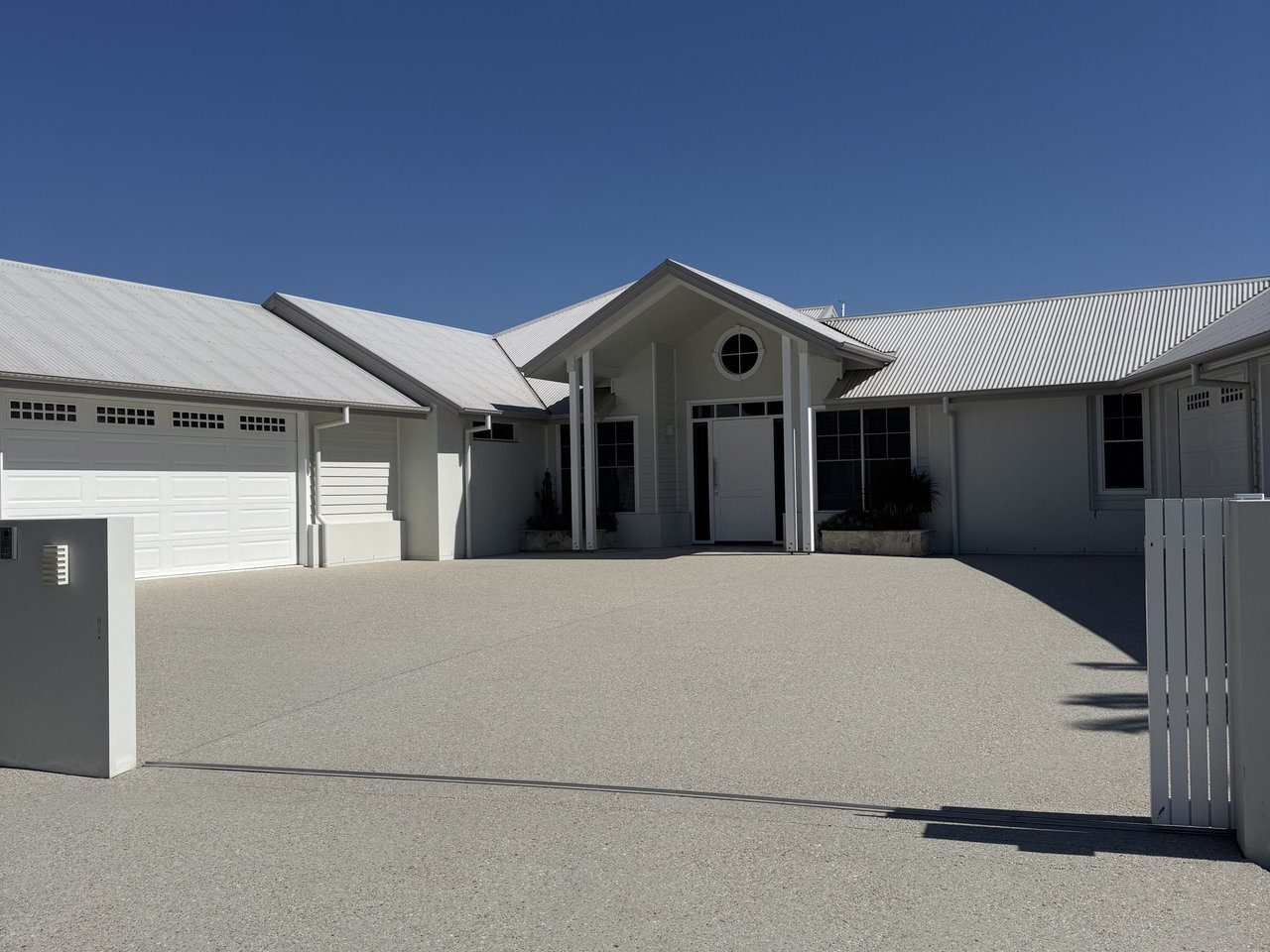
The Short Answer: Two to Ten Years, Depending on the Sealer
Ask how long concrete sealing lasts in Queensland and you'll get a range, not a number - and the range is wide for good reasons. A professionally applied clear penetrative sealer typically protects for 5 to 10 years. A coloured topical sealer generally needs renewing every 2 to 5 years. An epoxy floor system runs 10 to 15 years. Where your surface lands inside those ranges comes down to three things: how much traffic it carries, how much sun it cops, and how it's looked after.
This guide sets out the lifespans we actually work to across Brisbane, the Gold Coast and the Sunshine Coast, what South-East Queensland's climate specifically does to a sealer, the signs a surface is due, and what resealing costs. These aren't lab figures - they're the numbers we quote and stand behind on real driveways, patios and pool surrounds.
Why the Range Is So Wide
Two identical slabs sealed with the same product on the same day can be years apart at the other end. A driveway in full sun that carries two cars every day tends to sit near the 5-year mark for clear penetrative sealing, while a covered patio or shaded pool surround can easily push beyond 7 years on the same product. Traffic grinds at a surface mechanically; sun works on it chemically.
The type of sealer matters more than the brand on the tin. A penetrative sealer soaks into the pores and reacts within the concrete itself - there's no film on top to peel, flake or wear through. A topical sealer forms that film deliberately, which is what gives coloured topical sealing its colour and sheen - and the film is also what takes all the wear, which is why its renewal cycle is shorter.
What Queensland Heat Actually Does to a Sealer
Queensland receives some of the highest UV radiation levels in the world - summer UV index readings here regularly exceed 12. That radiation breaks down the cement paste at the surface of unprotected concrete, causing chalking and colour fade. Once a surface is sealed, the sealer is what stands in front of that punishment instead, and it spends itself doing so.
Heat compounds the chemistry. A slab in full summer sun can pass 60°C at the surface, and daily temperature swings can exceed 30°C - so the concrete under a sealer is constantly expanding and contracting, and a sudden afternoon storm can pull a baking surface's temperature down in minutes. Film-forming sealers feel this most, because the film has to flex with every one of those cycles.
The rest of the climate doesn't help. Humidity regularly sits above 80 per cent, feeding mould and algae wherever moisture lingers; storm cells can drop more than 100mm of rain in a few hours; and coastal winds can carry salt air up to 20 kilometres inland. It's why we treat sealing as part of every concrete sealing and coating job rather than an optional extra - and why the reseal cycle matters just as much as the first coat.
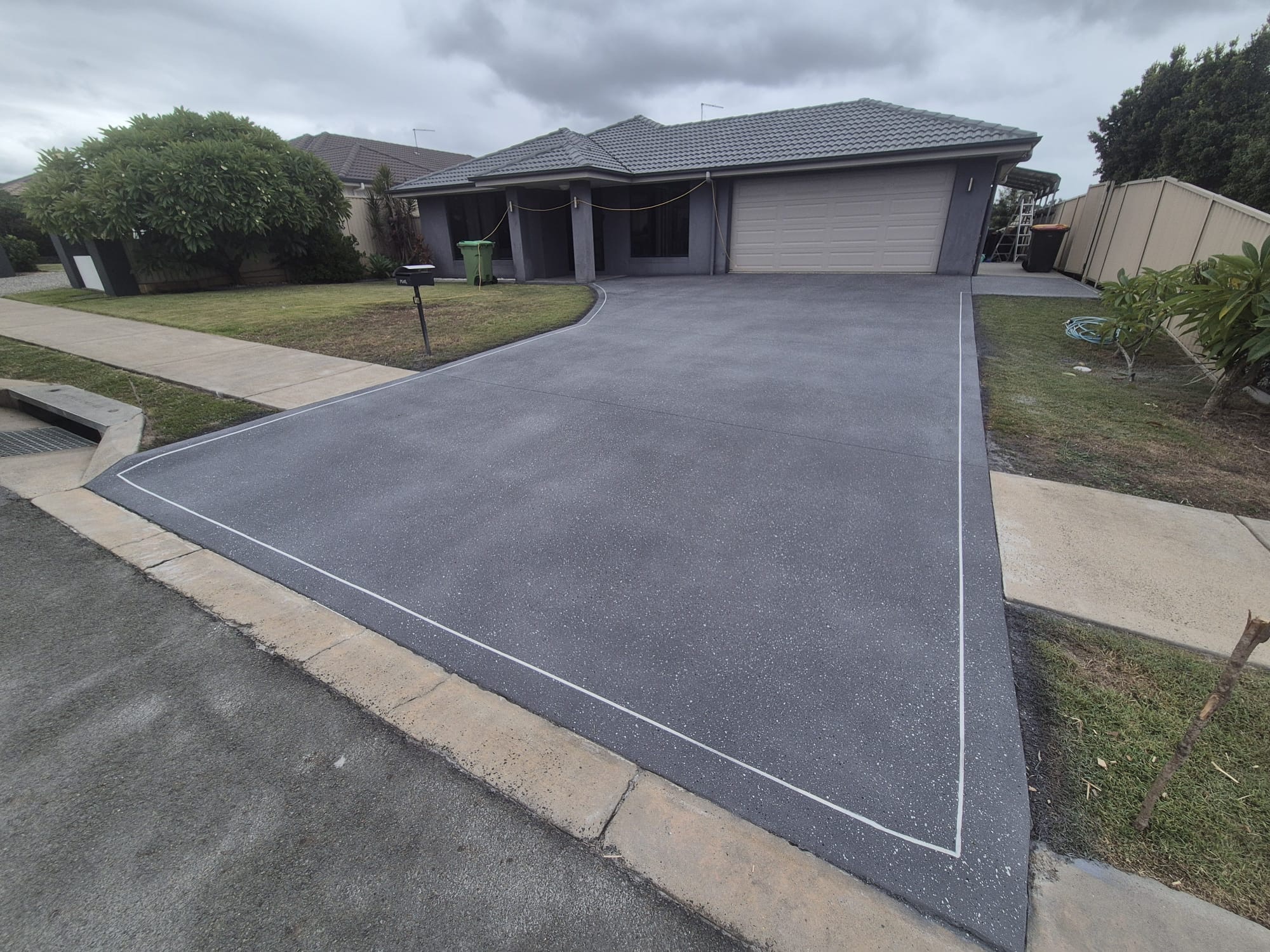
The Numbers We Work To
Clear penetrative sealing: 5 to 10 years. Driveways and other high-traffic, full-sun surfaces tend toward the 5-year end; covered patios and pool surrounds regularly push past 7. When it is due, reapplication is straightforward - there's no film to strip or sand back, so the surface is cleaned and a fresh coat goes on, usually inside a day.
Coloured topical sealing: 2 to 5 years. The film carries the colour and the wear together, so usage and exposure set the pace. We recommend checking the surface annually - regular maintenance stretches the interval significantly, and a fine anti-slip additive can be included whenever it's renewed.
Epoxy flooring: 10 to 15 years. Indoors and under cover, an epoxy floor avoids the UV that ages outdoor sealers, which is a large part of why it holds the longest interval of the lot. A spraycrete-resurfaced surface, resealed every 3 to 5 years, has a working life of 20-plus years - the reseal cycle is what keeps the whole system alive.
That's the honest core of this whole question: in this climate, sealing is a cycle, not a once-ever job. Budget for the cycle rather than the single visit and the concrete underneath stays protected indefinitely - which is far cheaper than letting the surface go and starting again.
How to Tell Your Sealer Is Nearing the End
Watch the water. On a healthy penetrative seal, rain and hose water bead and sit proud of the surface; when water starts soaking straight in and darkening the concrete, the protection is fading. Stains are the second flag - sealed concrete gives you a wide window to hose off oil, leaf tannin and grime before they set, and that window shrinking is the sealer wearing out.
On topical and coloured surfaces the film itself tells you: gloss dulls unevenly, wheel paths wear first, and the colour starts looking patchy rather than evenly faded. A quick check once a year - ideally after storm season - is enough to catch any of these early, while resealing is still a clean-and-recoat job rather than a restoration.
Stretching the Lifespan
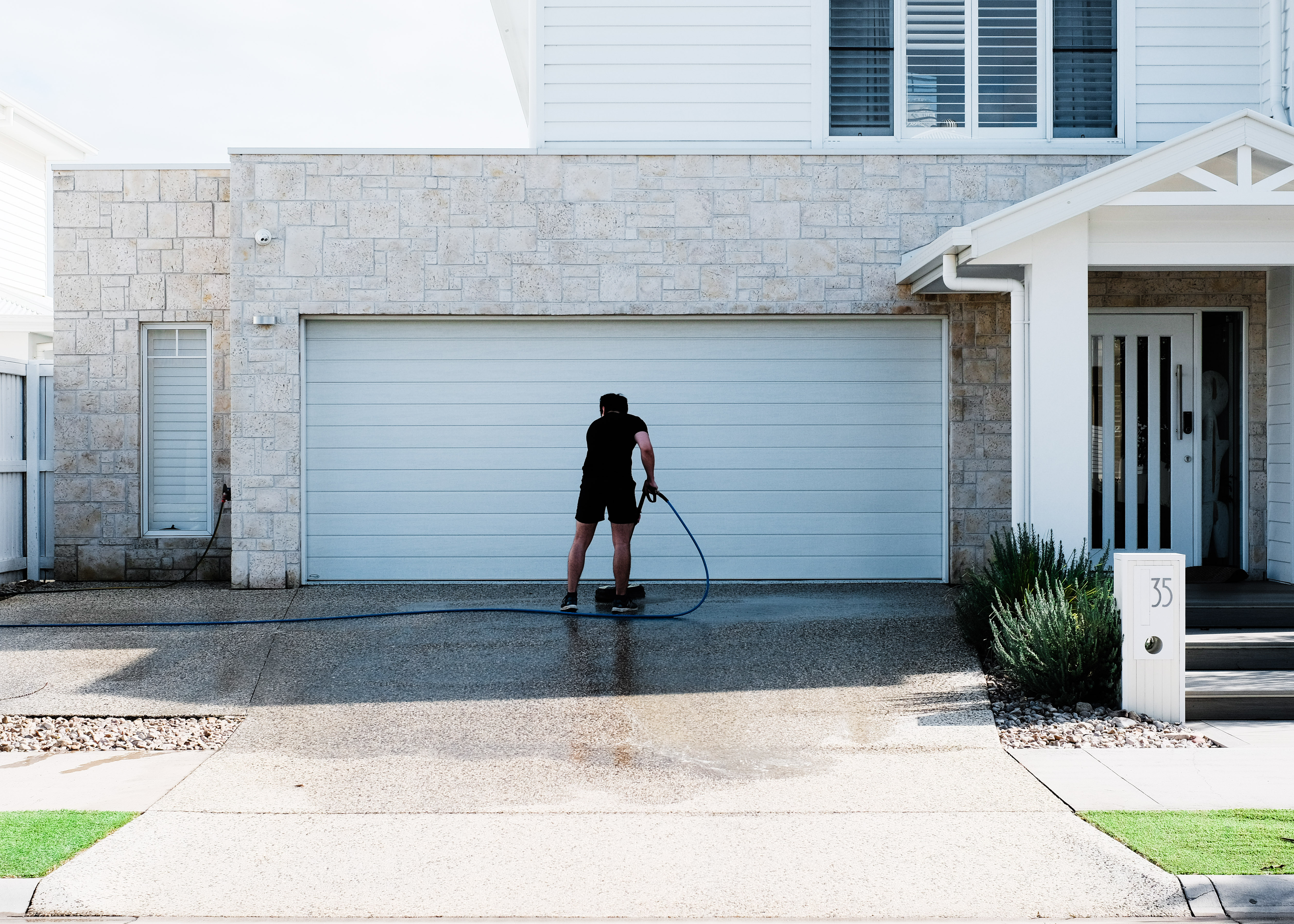
Maintenance is genuinely simple. A light pressure wash once or twice a year keeps mould, algae and grit from working at the surface, spills get hosed off promptly, and harsh chemicals stay off the sealer. The full routine is in our guide to maintaining freshly sealed concrete in South-East Queensland.
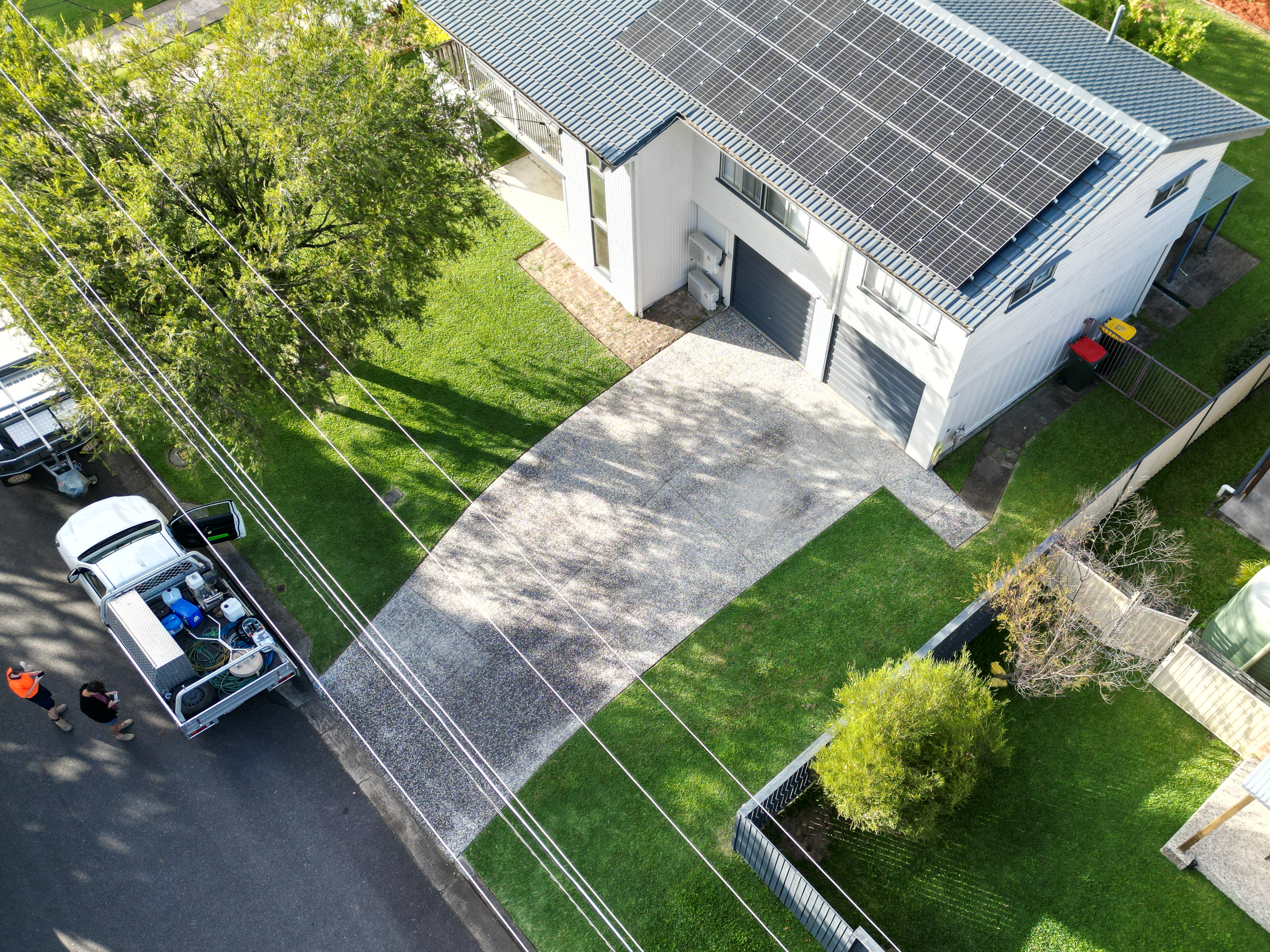
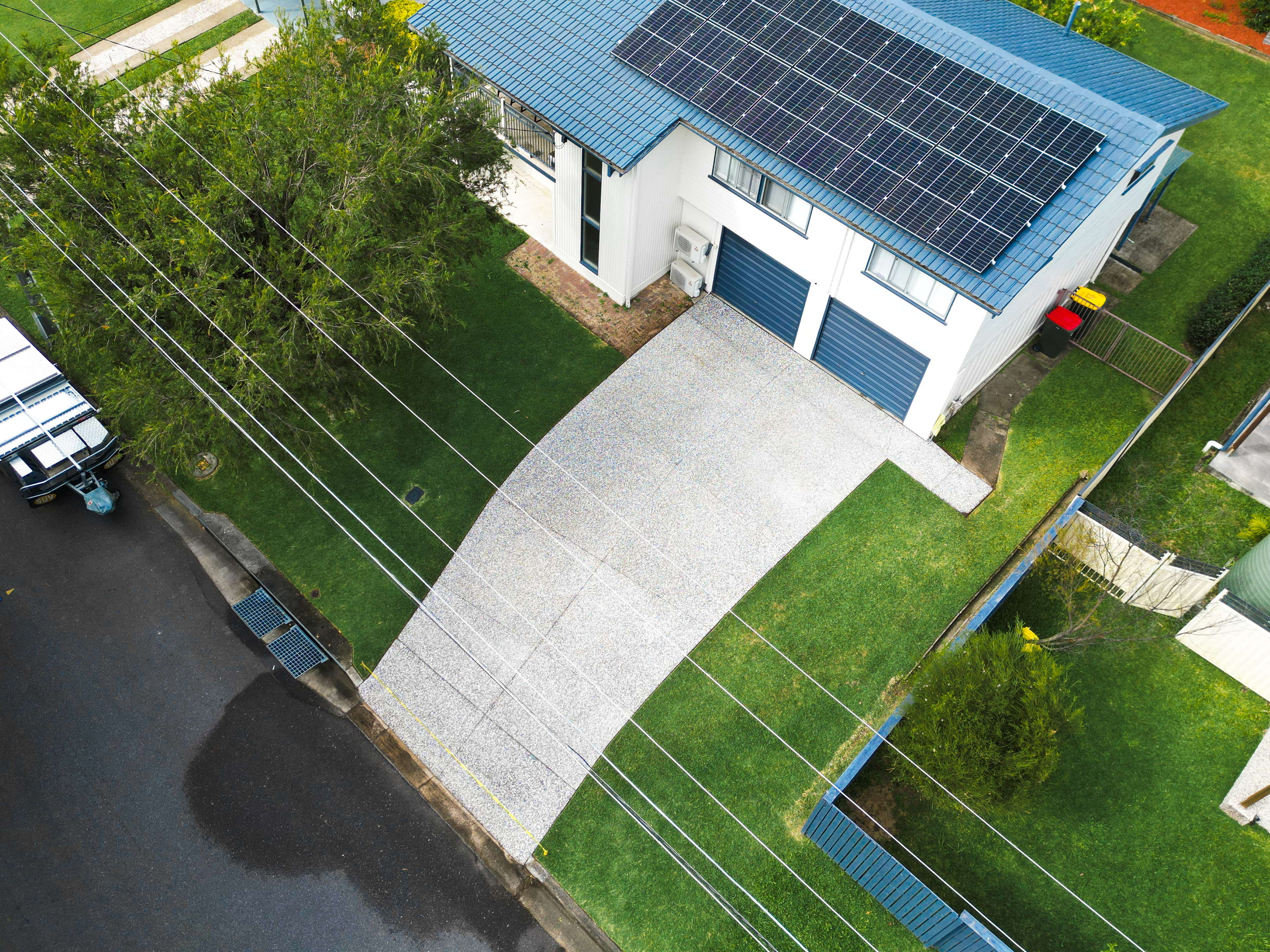
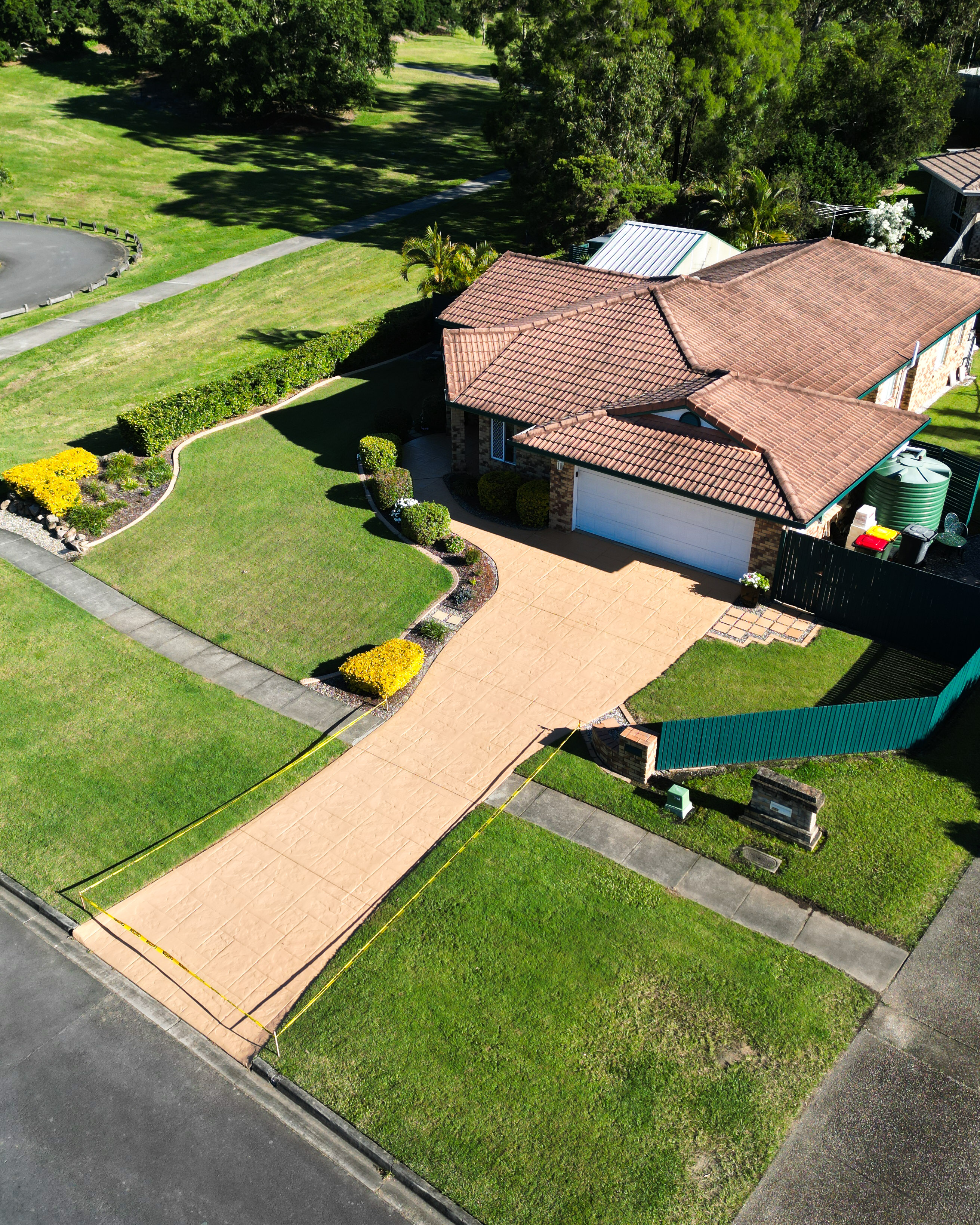
The other half of lifespan is timing the reseal. Done on schedule, it's a one-day job for an average driveway - foot traffic is back on in around 4 hours and vehicles in 24. Below is what a fresh clear seal delivers on a real Brisbane driveway: drag the handle to compare the same surface before and after.
What Resealing Costs in South-East Queensland
Most residential clear sealing jobs - driveways, patios, pool surrounds - land between $25 and $30 per square metre, including preparation and two coats of sealer, with larger areas pricing at the lower end of the range. Coloured topical work sits in the same band, with the finish and the slab's condition setting the final number.
Small areas carry a job minimum - clear penetrative work floors at about $2,000 including GST - so a tiny slab won't scale down proportionally. These are the same rates behind our online estimate wizard, so you can get an indicative number for your own measurements in a couple of minutes.
Against the alternative, the cycle is cheap insurance: replacing a typical concrete driveway runs $15,000 to $40,000, while staying on top of sealing costs a fraction of that and extends the concrete's life by 20 to 30 years.
Getting an Exact Number for Your Slab
Condition, access and preparation all move the price, so the ranges above are a starting point rather than a quote. We work across Brisbane, the Gold Coast and the Sunshine Coast, and we'll tell you on-site which sealer suits your surface and its exposure - including when the honest answer is that your existing seal has years left in it.
CoatPro is a QBCC-licensed contractor and a member of Master Builders Queensland, carrying over $20 million in public liability insurance, with more than 120,000 square metres of concrete coated across South-East Queensland. Get a free estimate in a couple of minutes, or call Christian on 07 4428 2811 to talk through your surface.
- An honest recommendation between penetrative and topical sealing, based on your surface and its exposure
- Indicative pricing before we're on site, and a detailed written quote after
- Foot traffic back on in around 4 hours and vehicles in 24 for penetrative sealing work
- Straightforward resealing when it's due - a clean and a fresh coat, not a restoration
- Extensive Queensland experience across all regions and applications
- Customised coating recommendations for Queensland's challenging climate
- Proven track record with thousands of satisfied customers
- Comprehensive warranties and ongoing support
- Licensed, insured, and committed to excellence
FAQs
Common questions about how long concrete sealing lasts in Queensland conditions.
Clear penetrative sealers typically last 5 to 10 years, coloured topical sealers 2 to 5 years, and epoxy floor systems 10 to 15 years. Where a surface lands in its range depends on traffic, sun exposure and maintenance - a full-sun driveway sits near the bottom of the range, while a covered patio or pool surround can push well past the middle.
Yes. Summer UV index readings in Queensland regularly exceed 12, slab surfaces can pass 60°C in full sun, and daily temperature swings can top 30°C, so an outdoor sealer is under constant UV attack while the concrete beneath it expands and contracts. That's why the same product lasts visibly longer on covered or shaded concrete than on an exposed driveway.
Watch for water soaking in rather than beading, stains setting faster than they used to, and - on topical sealers - dulling gloss or patchy wear in the wheel paths. Check once a year, ideally after storm season. Caught early, resealing is a straightforward clean and recoat, usually done in a day.
Most residential clear sealing jobs cost $25-30 per square metre including preparation and two coats of sealer, with larger areas at the lower end of the range and a job minimum of about $2,000 including GST on very small areas. An on-site inspection confirms the exact price, and quotes are obligation-free.
Get Your Free Quote Today
Transform your concrete surfaces with our expert sealing and finishing services. Contact us now to discuss your project and receive a personalised quote. We service all areas throughout South-East Queensland.
- Give Us A Call for immediate consultation
- Email us with your property details and photos
- Use our estimate calculator
- Book online for convenient assessment scheduling
