
The Three Things That Kill a Warehouse Floor
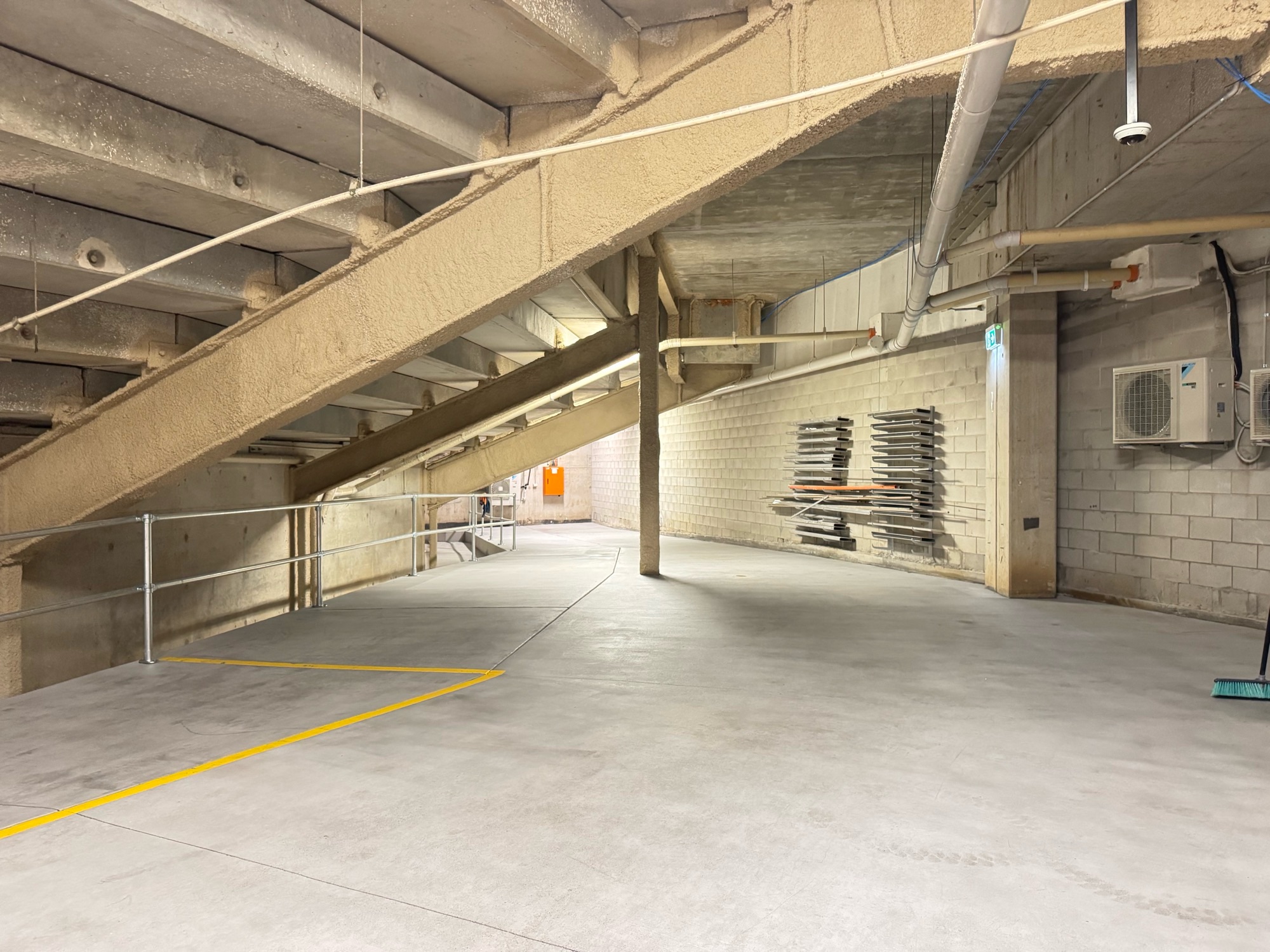
Walk any busy warehouse and the floor tells you how hard the operation runs. Forklifts and pallet jacks grind the surface on every pass, and bare concrete responds the way bare concrete always does: the top few millimetres abrade, the slab starts dusting, and every oil or chemical spill soaks straight in as a stain. Abrasion, dust and staining are the three failure modes we see on almost every commercial slab we assess in Brisbane.
Dusting is the quiet one. As the surface wears, fine concrete dust ends up on stock, on racking and in the air - which means more housekeeping, more maintenance complaints and a floor that keeps getting worse, because the dust is the slab itself slowly coming apart.
Downtime is the real cost
For a live operation, the per-square-metre rate is rarely what decides the job. The decider is how long the floor is out of service - how many hours of racking moves, staged work areas and halted picking a treatment actually costs. A cheap system that shuts a warehouse for a week is not cheap.
This guide compares the two systems we install on commercial floors in South East Queensland - epoxy coating and concrete densification - with our published pricing, realistic downtime for each, and an honest view of which floor suits which.
Option One: An Epoxy Coating System
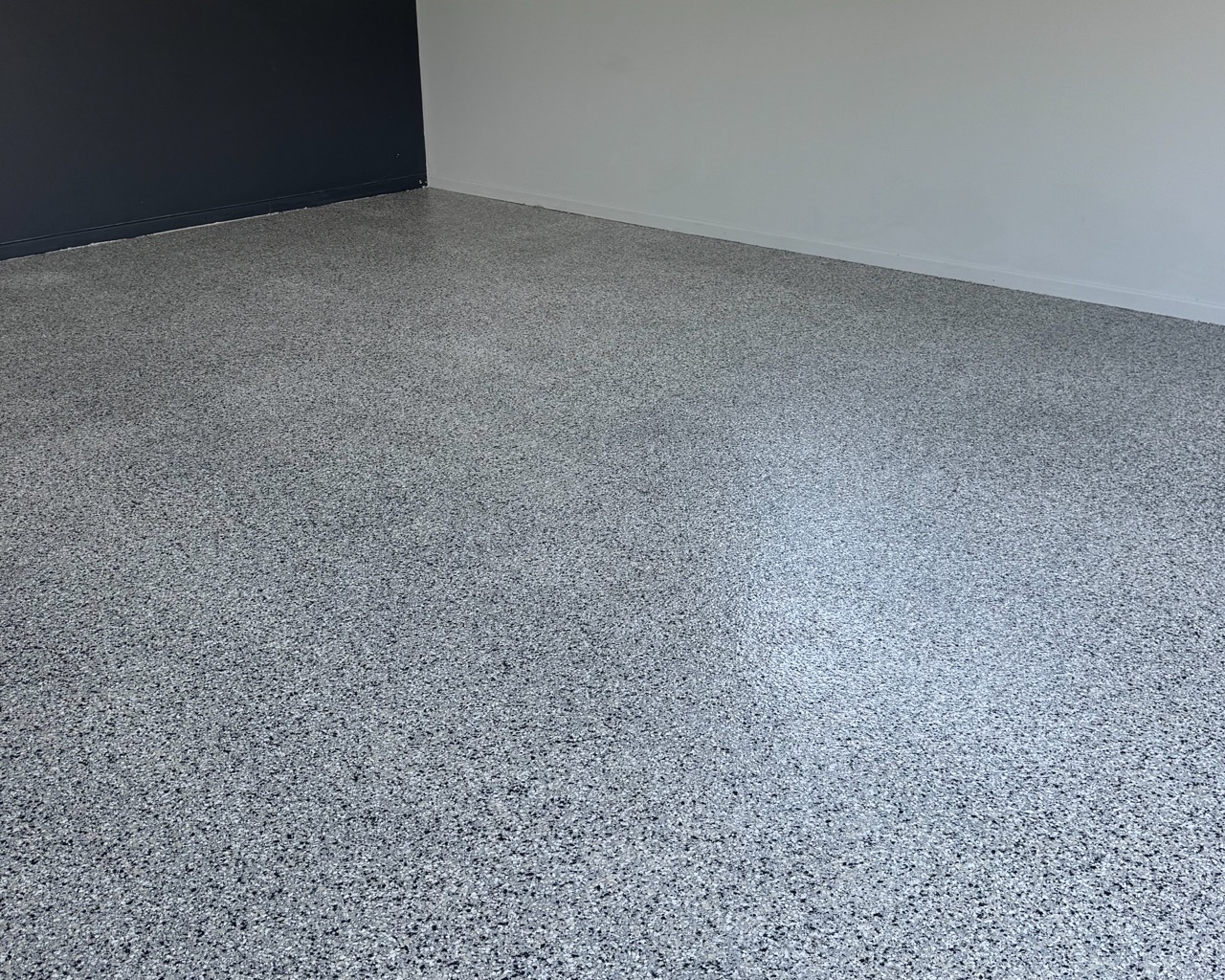
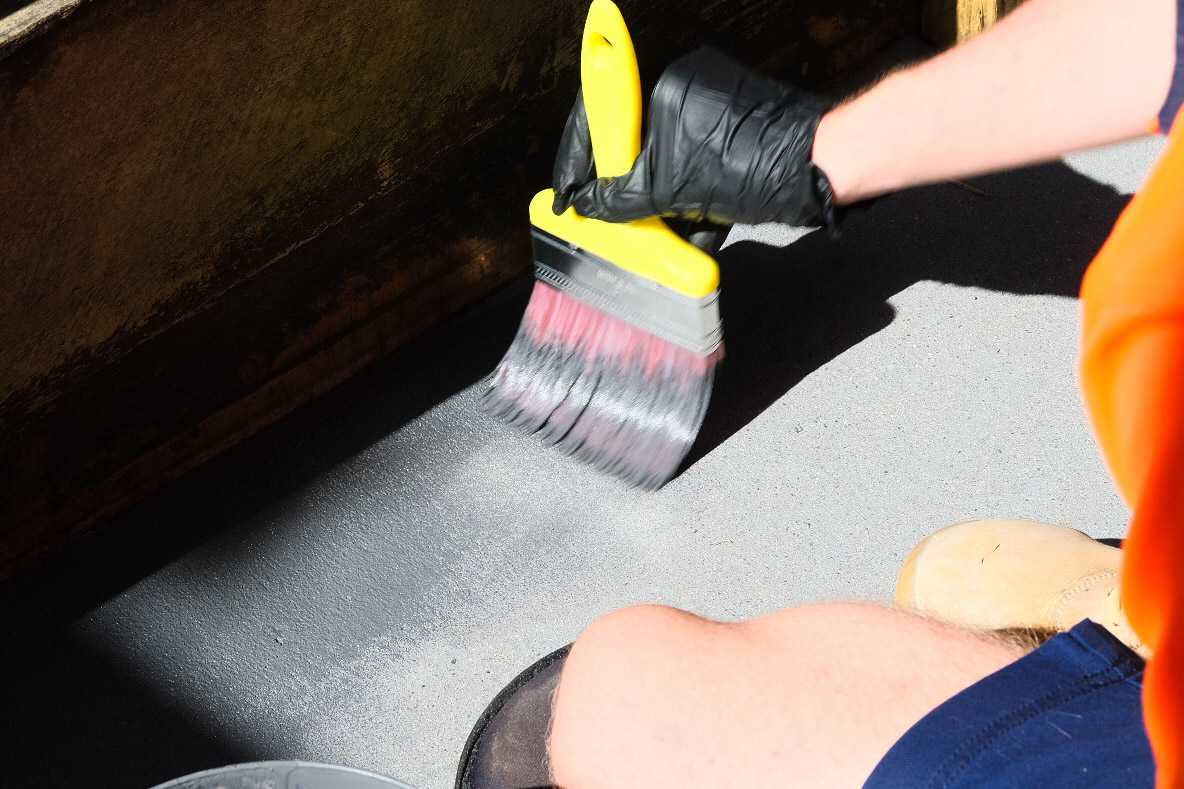
An epoxy floor is a multi-layer system, not a coat of paint. A primer penetrates the concrete to create adhesion, an epoxy base coat forms the tough structural layer, decorative vinyl flakes can be broadcast for texture and visual depth, and a polyurethane topcoat locks everything in and takes the day-to-day wear. Installed correctly, the result is a seamless surface that resists stains, chemicals, impact and heavy traffic - which is why it's the standard choice for workshops, showrooms and warehouse floors that cop spills as well as wheels.
Installation starts with mechanically grinding the slab to remove contaminants, old coatings and weak material, then repairing cracks and levelling imperfections before the coats go down. Most residential-scale epoxy flooring installs take two to three days; larger commercial floors scale with the area and the amount of preparation the slab needs.
The catch for a working warehouse is the cure. You can walk on a new epoxy floor after 24 hours, but vehicles and forklifts need to stay off it for 48-72 hours while the coating fully hardens. In exchange you get a floor with a 10-20 year working life depending on traffic, and anti-slip additives can be specified where traction matters.
Option Two: Densification - Harden the Slab Itself
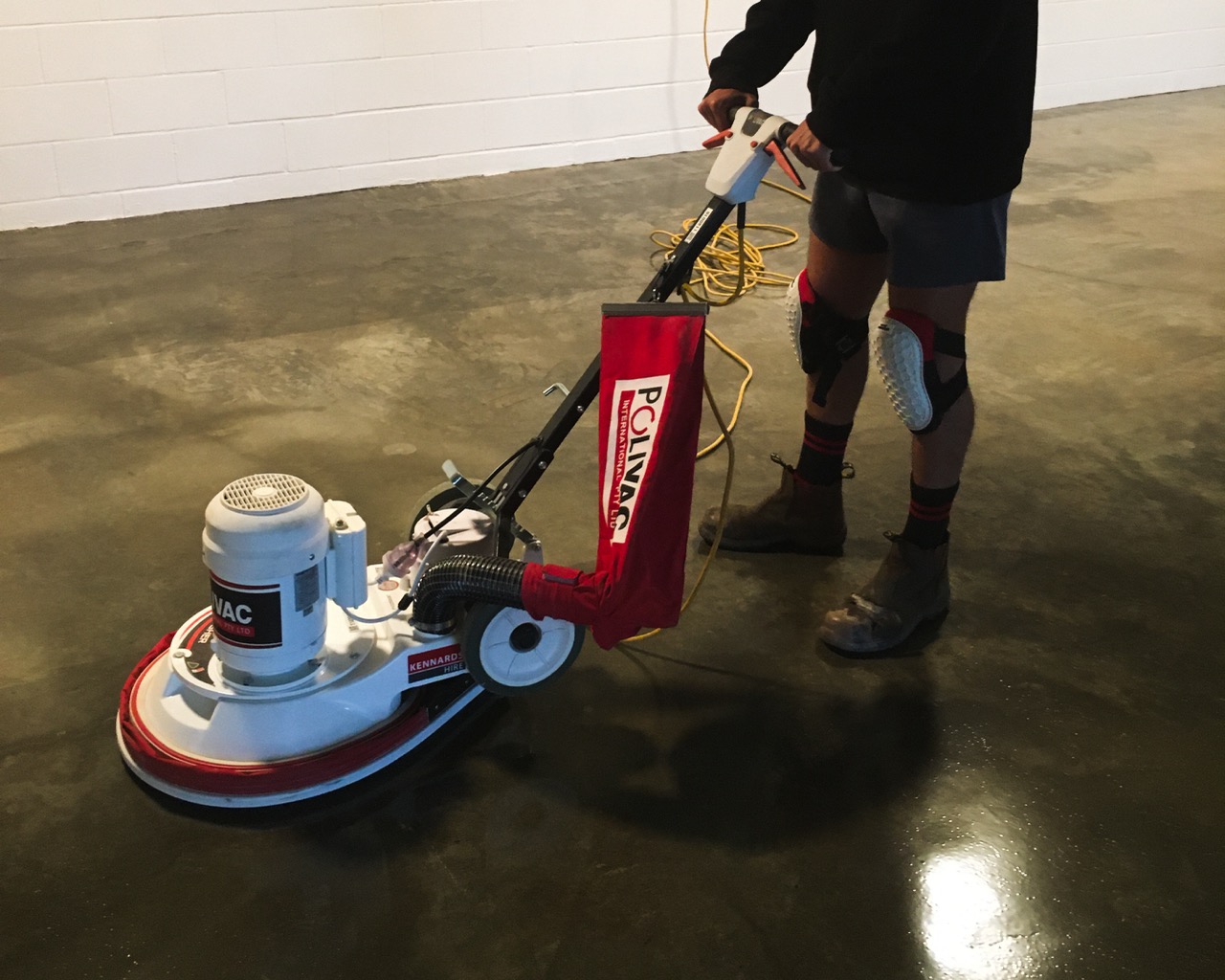
Densification takes the opposite approach: instead of adding a layer on top, it makes the concrete itself harder. A colloidal silica densifier penetrates the top few millimetres of the slab and reacts with the calcium hydroxide inside it to form calcium silicate hydrate - the same compound that gives concrete its strength. The reaction hardens the top 3-5mm, dramatically increasing abrasion and impact resistance for forklifts, pallet jacks and heavy foot traffic.
Because the treatment becomes part of the slab, it's permanent. There is no film to peel, no recoat schedule and no maintenance cycle - and it stops concrete dust at the source by locking down loose particles at the surface. The look barely changes: after burnishing you get a slight natural sheen and a more uniform appearance, but the floor still reads as raw concrete.
We're an authorised applicator of Oxtek's densification system, and every qualifying job is issued a written 15-year manufacturer warranty against dusting, surface deterioration and abrasion failure under normal commercial use. The products are water-based and low-VOC - safe for indoor commercial environments, including food-handling facilities and warehouses with active staff.
It's also the fast option. We can typically densify 500-1,000m² in a working day depending on slab condition; the floor is walkable within hours and ready for full traffic within 24 hours, so most floors are back in service the same day or the next morning.
The Numbers: Price Per Square Metre and Time Offline
Most commercial densification projects fall between $15 and $40 per square metre, with larger areas at the lower end of the range. Epoxy runs to our published rates of $85 per square metre for a standard two-coat solid colour system, $95 for decorative flake and $130 for a premium metallic finish, before GST - with a loading where the slab needs significant repair and preparation. On commercial jobs the written quote after an on-site assessment is what settles the number, because slab condition, access and prep drive it more than the finish does.
Downtime is where the two systems really separate. On a 1,000m² floor, densification is typically one to two days of application with full traffic back within 24 hours of finishing. The same floor in epoxy needs its grinding, repair and coating days first, and then 48-72 hours with vehicles and forklifts off the surface while it cures. If your shutdown window is a weekend, that difference usually decides the system before price enters the conversation.
Which System Suits Your Floor
Epoxy earns its place where the floor cops more than wheels: workshops and warehouse zones with oil and chemical spills, washdown areas, and any space where you want a sealed, seamless surface in a chosen colour - line-of-sight showroom floors included. A coating also gives you the option of built-in slip resistance where a smooth burnished slab wouldn't be appropriate.
Densification wins where wear and dust are the problem and the floor needs to keep looking like concrete: distribution and storage areas, racking aisles, and any operation that can't afford days offline. The two aren't mutually exclusive either - densification handles hardness, wear and dust, while concrete sealing handles staining and chemical resistance, so many commercial floors get both: densified first, then sealed. Our concrete sealing team in Brisbane quotes that combination as one scope.
Working Around a Live Operation
Commercial floors rarely get the luxury of an empty building, so for live sites we offer after-hours and staged applications to keep the operation running while sections are treated. We work on slabs from a single bay up to 10,000m²-plus - from distribution centres in Acacia Ridge to workshops on the Gold Coast and retail floors on the Sunshine Coast. New pours can be densified once they've cured, typically 14-28 days after placement, and existing slabs can be treated in any condition after grinding and cleaning.
CoatPro is a QBCC-licensed contractor and a member of Master Builders Queensland, and we carry over $20 million in public liability insurance. We've upgraded more than 120,000 square metres of concrete across South East Queensland, so a warehouse floor is rarely a surface we haven't seen before. If you're weighing these systems against sealing or resurfacing options for other surfaces on site, our comparison of every concrete coating option in Brisbane covers the full menu.
Getting a Fixed Price for Your Warehouse Floor
The ranges above are a starting point. What your floor actually costs depends on the slab's condition, the preparation it needs, the area and the access - which is why every commercial job gets an on-site assessment and a clear written quote up front, so you know the full scope and price before anything starts.
Tell us about your floor - slab age, area, condition and what it's used for - through our free estimate form, or call Christian on 07 4428 2811 to talk through downtime windows and staging for your site.
- An honest recommendation between epoxy and densification based on how your floor is actually used
- A clear written quote after an on-site assessment - scope and price known up front
- After-hours and staged application options to minimise operational downtime
- A written 15-year Oxtek manufacturer warranty on qualifying densification jobs
- Extensive Queensland experience across all regions and applications
- Customised coating recommendations for Queensland's challenging climate
- Proven track record with thousands of satisfied customers
- Comprehensive warranties and ongoing support
- Licensed, insured, and committed to excellence
FAQs
Common questions about coating and hardening commercial warehouse floors.
Most commercial densification projects fall between $15 and $40 per square metre, with larger areas at the lower end of that range. Epoxy coating systems run to our published rates of $85 per square metre for a standard two-coat solid colour, $95 for decorative flake and $130 for a premium metallic finish, before GST. Every commercial job gets a written quote after an on-site assessment, because slab condition and preparation drive the final number.
Densification is the fast option: we can treat 500-1,000 square metres in a working day, the floor is walkable within hours and ready for full traffic within 24 hours. An epoxy system needs its installation days plus curing - you can walk on it after 24 hours, but vehicles and forklifts need to stay off for 48-72 hours while the coating fully cures.
A professionally installed epoxy floor lasts 10-20 years depending on traffic before it needs recoating. Densification is permanent - it chemically becomes part of the slab, so there is no film to wear off and no recoat cycle, and qualifying jobs carry a written 15-year Oxtek manufacturer warranty against dusting, surface deterioration and abrasion failure.
Yes. For live commercial sites we offer after-hours and staged applications so the operation keeps running while sections of floor are treated. Densification products are water-based and low-VOC, safe for indoor environments including food-handling facilities and warehouses with active staff.
Get Your Free Quote Today
Transform your concrete surfaces with our expert sealing and finishing services. Contact us now to discuss your project and receive a personalised quote. We service all areas throughout South-East Queensland.
- Give Us A Call for immediate consultation
- Email us with your property details and photos
- Use our estimate calculator
- Book online for convenient assessment scheduling
